
Regardless of where you stand on the man, Henry Kissinger was a true political legend. In a life that stretched slightly past 100 years, he had a hand in more world-changing decisions than perhaps anyone in the history of politics. Few figures of the twentieth century inspired such fierce admiration and such bitter condemnation from the same set of facts.
In the light of his passing, WarFronts takes a deep dive into just who this man was: why he has been described by many as an American hero, and, just as importantly, why some of the decisions he made during a long and illustrious career led others to brand him a war criminal. Kissinger’s career bridged the Treaty of Versailles and the modern era, the liberation of Nazi concentration camps and the carpet-bombing of neutral nations, the Nobel Peace Prize and accusations of complicity in genocide.
The question worth answering is a simple one with no simple answer: who exactly was Henry Kissinger?
Situation Brief
- Henry Kissinger was born Heinz Alfred Kissinger on 27 May 1923 in Bavaria, Germany, into an orthodox Jewish family that endured escalating anti-Semitism before fleeing to the United States in 1938.
- Drafted into the U.S. Army in 1943, he fought in the Battle of the Bulge, served in the Counter Intelligence Corps, and took part in the liberation of the Ahlem concentration camp.
- The GI Bill helped fund his education at Harvard, where he earned a PhD in history in 1954 and built a career as an academic and government consultant before entering Richard Nixon’s administration as national security advisor.
- Kissinger is credited with the diplomatic opening to China, landmark U.S.-Soviet arms control talks, and a shared Nobel Peace Prize nomination for negotiating an end to the Vietnam War with Le Duc Tho.
- He also ordered or supported secret bombing campaigns in Cambodia and Laos, with Laos becoming the most heavily bombed country in the history of warfare.
A Childhood Shadowed by Anti-Semitism
Born on 27 May 1923 in Bavaria, Germany, Heinz Alfred Kissinger did not have an easy time growing up. Although the child of relatively well-off parents, he was raised as an orthodox Jew at a moment when Germany was still reeling under the debilitating conditions imposed by the Treaty of Versailles. Many Germans had already begun to isolate Jewish citizens, blaming them for the country’s deteriorating social and economic conditions. The young Kissinger and his family became frequent targets of anti-Semitism.
By one account, Kissinger was an avid soccer fan. Although Jews had already been banned from attending such sporting events, he and his friends would defy the ban, often paying for it with beatings administered by stadium guards. As if that were not enough, they were regularly subjected to verbal and physical abuse by gangs of Hitler Youth members. A friend from the period later recalled the toll it took: “You can’t grow up like we did and be untouched.
Every day there were slurs in the streets, anti-Semitic remarks, calling you filthy names.”
As the brutality intensified, Kissinger withdrew into himself, becoming more insular and spending much of his time alone with his books.
From Refugee to American Soldier
That solitary study paid dividends. Kissinger excelled academically at the local Jewish school and harbored hopes of attending a respected state-run high school. By the time he was old enough, however, the school in question, and indeed all state-run high schools, had stopped accepting Jewish applicants. In 1938, fully aware of which way the wind was blowing and fortunate enough to have the means to leave, the Kissinger family departed Germany for the United States.
Arrival brought hardship. With very little money, the fifteen-year-old Heinz immediately took work at a shaving brush factory to supplement his family’s meager income. Even so, he enrolled in high school and his scholastic brilliance shone through. He learned English with remarkable ease. One former teacher described him as “the most serious and mature of the German refugee students,” adding that those students “were more serious than our own.”
Watch on WarFronts
Watch the full video analysis on the WarFronts YouTube channel, presented by Simon Whistler.
He still struggled to connect with his peers. In notes written during school and published years later, he criticized “the casual approach to life” he saw in America, where “no one has the courage to look life squarely in the eye.” Given everything he had already endured in his first seventeen or eighteen years, his difficulty relating to the average carefree American high schooler is perhaps understandable.
After graduation, Kissinger studied accounting at university, another field at which he proved naturally gifted. In an alternate timeline, the story might have ended there: a young, gifted refugee settling into a successful but uneventful career as an accountant. That future was not to be. In 1943, shortly after obtaining American citizenship, the now Henry Kissinger was drafted into the United States Army.
The Soldier Who Returned to Germany
About three months after he was drafted, and five years after fleeing Germany, Kissinger was assigned to G Company, 2nd Battalion, 335th Infantry Regiment, and sent back toward the place of his birth. In a turn rarely experienced by the academically inclined, he took to army life as easily as he had to scholarship. “The significant thing about the army,” he later wrote, “is that it made me feel like an American.”
Well respected among his fellow soldiers, he was promoted to “education officer” and developed a knack for explaining complicated matters clearly and simply, a skill that would serve him for the rest of his career. Shortly after arriving in Germany he participated in the Battle of the Bulge before becoming the special agent in charge of the regimental Counter Intelligence Corps (CIC) team.
At first the work was mundane, described as “rounding up and evacuating German civilians considered unreliable and poring through mail and paperwork left behind.” It soon grew more complex, giving Kissinger his first taste of dealing with members of government. In a CIC report he wrote: “For twelve years, the Nazis have had a stranglehold on those in public office… It becomes the duty, therefore, of the occupying authorities to clean the city administration of these cliques of Nazis.”
A German-speaking Jew who had grown up in the country, Kissinger was ideally suited to this denazification task. While still engaged in active duties, including the liberation of the concentration camp at Ahlem, he remained in Germany until 1947, determined, in his words, to “do in our little way what we could to make all previous sacrifices meaningful.”
The Making of a Scholar-Statesman
When Kissinger returned to America, his accounting ambitions were gone. He wanted to teach. His time in Germany had shaped a conviction he carried for the rest of his life: “High office teaches decision-making, not substance. It consumes intellectual capital; it does not create it. Most high officials leave office with the perceptions and insights with which they entered.” With his blend of real-world experience and academic knowledge, he believed himself almost uniquely placed to improve the world.
The GI Bill, signed into law by President Roosevelt while Kissinger was still in Germany, gave returning servicemen tuition-free education and a cost-of-living stipend. That funding, paired with his abilities, carried him to Harvard, where he earned a PhD in history in 1954 and almost immediately joined the faculty, working for the Department of Government and the new Center for International Affairs.
He published his first two books, A World Restored: Castlereagh, Metternich and the Restoration of Peace, 1812-1822 and Nuclear Weapons and Foreign Policy, while also consulting for the National Security Council, the Council on Foreign Relations, the Rand Corporation, the State Department, and the Arms Control and Disarmament Agency. Through this work he met Nelson Rockefeller, then governor of New York, who hired him as his foreign policy advisor across three unsuccessful presidential bids in 1960, 1964, and 1968. Among those watching Kissinger’s meteoric rise was the man who beat Rockefeller for the presidency in 1968: Richard Nixon. Having promised “peace with honor,” Nixon needed serious help, and he brought Kissinger into his government as national security advisor.
Vietnam, Cambodia, and the Bombs Over Laos
It is here that the first real controversy begins. Kissinger is widely credited with helping end the Vietnam War through secret negotiations during the stalled Paris peace talks with Le Duc Tho, talks that eventually brought the conflict to a close and saw both men nominated for the Nobel Peace Prize. Yet many lay the blame for thousands of unnecessary deaths squarely at his feet.
Although the United States was not at war with Cambodia, Kissinger believed a massive bombing campaign was necessary to stop the Khmer Rouge from aiding the communist North Vietnamese army. As one account put it, “The fissures from the disastrous military campaign led to an eight-year civil war between the Cambodian government and the genocidal Khmer Rouge regime led by Pol Pot. The war killed an estimated 275,000–310,000 people, displaced millions, and destroyed a fifth of the country.”
Declassified telephone transcripts show Kissinger ordering these attacks, known as Operation Menu, in strikingly callous terms. After speaking directly with Nixon, he relayed the order to his deputy Alexander Haig: “He wants a massive bombing campaign in Cambodia… It’s an order, it’s to be done. Anything that flies, on anything that moves. You got that?” The order stands in stark contrast to his later claims that the raids struck only sparsely populated areas.
Cambodia was not the only country to suffer. Kissinger was also deeply involved in organizing the bombing of Laos. This neutral nation remains, to this day, the most heavily bombed location in the history of warfare, with some 2,093,100 tonnes of ordnance dropped on it. An estimated third of those bombs never detonated, and civilians continue to suffer the consequences daily.
Because these campaigns were concealed from the public and, in some cases, from Congress, many people remain unaware of Kissinger’s involvement.
East Timor, Chile, Argentina, and Bangladesh
Similar undisclosed maneuvering surfaced in the case of East Timor under Kissinger and President Ford. In 1975, the small island nation in Southeast Asia declared independence from Portuguese colonial rule. Its bid for autonomy met immediate resistance. Kissinger was accused of tacitly supporting Indonesia’s invasion of the territory; the U.S. government valued its strategic alliance with Indonesia as a bulwark against communism in the region, and that alliance shaped American policy.
As Indonesia moved to annex East Timor, allegations grew that Kissinger and the administration were aware of, and even supportive of, the aggression. In 1995, asked directly whether the suspicions were true, Kissinger categorically denied any involvement. That denial was exposed as a lie in 2001, when declassified documents revealed that during a visit to Indonesia with President Ford, a green light for the invasion had been given.
The records show Kissinger telling Indonesian dictator Suharto, “It is important that whatever you do succeeds quickly.” The invasion succeeded, and East Timor did not gain independence until 2002. Reflecting after Kissinger’s death, the President of East Timor said: “Those who follow history, who follow international politics — they know about this past, which was tragic and ugly.”
Comparable revelations emerged elsewhere. In Chile, Kissinger led the Nixon administration’s efforts to destabilize the democratically elected president after he reestablished diplomatic ties with Cuba and the Soviet Union. In Argentina, Kissinger backed the military junta of General Jorge Rafael Videla, which by one account “led to the infamous Dirty War between 1976 to 1983, where Argentina’s military rulers killed or ‘disappeared’ between 10,000 and 30,000 citizens.” And in 1970, in East Pakistan (later Bangladesh), Kissinger and Nixon supported a genocide that killed an estimated 400,000 people by illegally shipping military hardware to the perpetrators.
The Case for the Defense
Grim as that record is, Kissinger’s proponents argue, and continue to argue, that almost everything he did in service of the United States government was meant to benefit the country he called home. Even though his actions in Vietnam cost the lives of thousands of American servicemen and women, many have contended that the “shock and awe” tactics he favored helped project American toughness on the world stage.
His defenders also point to achievements that are hard to dispute. It is undeniable that his efforts produced the U.S. diplomatic opening with China, landmark U.S.-Soviet arms control talks, and expanded ties between Israel and its Arab neighbors. These were the foundations of détente and a realignment of Cold War power that reshaped the second half of the twentieth century.
Although he officially retired from politics in 1977, Kissinger never truly left the arena. He founded his own consultancy firm, weighed in publicly on diplomatic issues around the world, and served as a personal advisor to nearly every president who followed.
Two Verdicts, No Middle Ground
The way Kissinger was perceived around the world can be captured by two very different statements released after his death. The first, from former President George W. Bush, reads: “America has lost one of the most dependable and distinctive voices on foreign affairs with the passing of Henry Kissinger. I have long admired the man who fled the Nazis as a young boy from a Jewish family, then fought them in the United States Army.
When he later became Secretary of State, his appointment as a former refugee said as much about his greatness as it did America’s greatness… I am most grateful for his friendship.”
The second, from Ben Rhodes, former deputy national security advisor to Barack Obama, is its mirror image: “At turns opportunistic and reactive, his was a foreign policy enamored with the exercise of power and drained of concern for the human beings left in its wake… He wrote a shelf of books, many of which polished his own reputation as an oracle of global affairs; after all, history is written by men like Henry Kissinger, not by the victims of superpower bombing campaigns, including children in Laos, who continue to be killed by the unexploded bombs that litter their country.”
These two diametrically opposed opinions seem to encapsulate the views of almost everyone who speaks about him. To the eyes of the world, Henry Kissinger is either an American hero or an unconvicted war criminal; there is not much middle ground. As ever, the verdict is left to the reader.
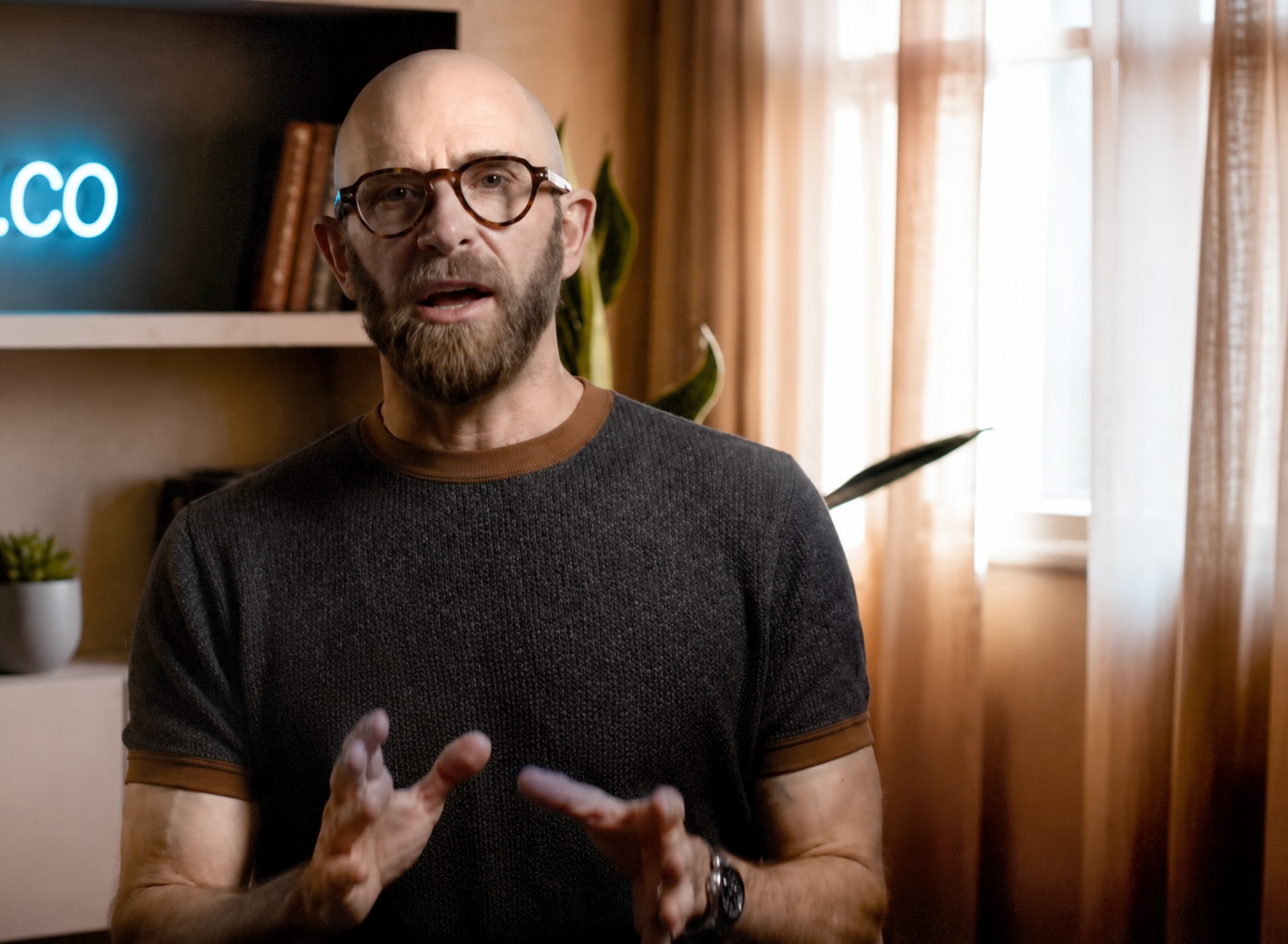
Simon Whistler
Simon Whistler is one of YouTube's most prolific educational creators. WarFronts is his deep dive into geopolitics, conflict analysis, and defense strategy.
Intel Q&A
What diplomatic achievements is Kissinger credited with?
Kissinger is credited with engineering the U.S. diplomatic opening with China, conducting landmark U.S.-Soviet arms control talks that formed the foundation of détente, and helping negotiate an end to the Vietnam War with Le Duc Tho, an effort that earned both men a shared Nobel Peace Prize nomination. He also worked to expand ties between Israel and its Arab neighbors, reshaping the Cold War balance of power in the second half of the twentieth century.
What did Kissinger do during World War II?
Drafted into the U.S. Army in 1943, Kissinger served with the 335th Infantry Regiment, fought in the Battle of the Bulge, and became the special agent in charge of the regimental Counter Intelligence Corps team tasked with denazification. He participated in the liberation of the Ahlem concentration camp and remained in Germany until 1947, determined, in his own words, to “do in our little way what we could to make all previous sacrifices meaningful.”
Why do critics call Kissinger a war criminal?
Critics point to his ordering of Operation Menu — the secret bombing of Cambodia, recorded in declassified transcripts where he relayed Nixon’s command to hit “anything that flies, on anything that moves” — and his organization of the bombing of Laos, which became the most heavily bombed country in the history of warfare. He also tacitly supported Indonesia’s invasion of East Timor, helped destabilize the democratically elected government of Chile, backed Argentina’s military junta during the Dirty War, and supported the perpetrators of the 1970 killings in East Pakistan.
What was Operation Menu and why was it controversial?
Operation Menu was the secret U.S. bombing campaign against Cambodia, a country with which the United States was not at war. The campaign was concealed from Congress and the public. Declassified telephone transcripts show Kissinger relaying Nixon’s order to Alexander Haig: “He wants a massive bombing campaign in Cambodia… Anything that flies, on anything that moves.” The bombings contributed to a civil war that killed an estimated 275,000–310,000 people and helped bring the genocidal Khmer Rouge to power.
How is Kissinger remembered after his death?
Opinion is sharply divided and offers little middle ground. Former President George W. Bush praised him as a dependable statesman, a man whose appointment as a former refugee said “as much about his greatness as it did America’s greatness.” Former Obama deputy national security advisor Ben Rhodes offered the opposing verdict, condemning a foreign policy “enamored with the exercise of power and drained of concern for the human beings left in its wake,” citing children in Laos still killed today by unexploded ordnance from Kissinger’s bombing campaigns.


