
Remember Venezuela? When President Trump sent special forces into Caracas to snatch former President Nicolas Maduro in the middle of the night in early January, most observers assumed this would be the biggest story of the year. There was breathless coverage of what the arrest meant for Latin America — especially since, just months before the operation, Washington had released a National Security Strategy document placing renewed emphasis on the region. It read as a return to the Monroe Doctrine that guided the United States in the 19th century: the Americas were Washington’s backyard, and all other powers should butt out.
The implication was that the United States would now pivot to Latin America. US oil companies moving into Venezuela, the ongoing feud with Cuba — these would become the priority, rather than starting new wars in the Middle East. And then you all know what happened next. Venezuela disappeared from the headlines, replaced first by Trump’s spats with Europe, and then by the war with Iran.
But even as the media cycle moved on, things did not stay still in Venezuela itself. Under Vice President Delcy Rodriguez, the government has begun a quiet but sweeping purge of Maduro’s inner circle, removing his loyalists from positions of influence — apparently with Washington’s knowledge and, at times, at its implicit urging. The impact has been a silent reshaping of Venezuelan society, one that would have been unthinkable only four months ago.
Situation Brief
- After Maduro’s January capture, Vice President Delcy Rodriguez inherited an untenable balancing act: appease Washington while preventing a Chavista fracture or military coup. Within four months, she chose Washington.
- Since Maduro’s arrest, Rodriguez has replaced seventeen ministers, overhauled military leadership, appointed new diplomats, and overseen the detention of at least three businessmen linked to her predecessor, according to the New York Times.
- General Vladimir Padrino López, Maduro’s longest-serving defense minister of more than eleven years and a plausible threat to Rodriguez, was demoted to run the agriculture ministry.
- Interior Minister Diosdado Cabello — a man with a $25 million bounty on his head — has survived the purge because he commands the repression apparatus and carries deeper ties to Hugo Chávez than even Maduro did.
- The opposition has been left fractured and sidelined after Trump declined to back it; Nobel Peace Prize winner Maria Corina Machado remains in exile but plans to return before the end of 2026.
This is the story of how a transitional leader consolidated power in plain sight, and why the very stability the United States now prizes may be the thing that keeps Venezuela from becoming a democracy.
The Balancing Act After Maduro’s Capture
In the immediate aftermath of Maduro’s January capture, Iria Puyosa, a senior research fellow at the Atlantic Council, wrote that his replacement, Delcy Rodriguez, faced an untenable balancing act. On one hand, she had to appease Washington, because Trump had made clear she would pay a bigger price than Maduro if she did not do what he expected. On the other, she had to maintain the unity of the Chavista regime Maduro left behind, to prevent an internal fracture or a military coup.
In the early days, Rodriguez appeared to thread this needle carefully — mollifying Trump while not upsetting the hardliners. She delivered a fiery speech hours after Maduro’s arrest, demanding his release and insisting that he was the country’s only president. More tellingly, she delivered the address flanked by what she called Venezuela’s National Defense Council, which included the defense minister, the attorney general, and the heads of the legislature and judiciary — all close allies of Maduro. The staging was the message: she was still one of them, and the regime was still united.
A few hours later, her tone had shifted. On the messaging platform Telegram, she wrote that it was a priority for the United States and Venezuela to move toward a balanced and respectful relationship, inviting Washington to work together on an agenda for cooperation aimed at shared development.
Saying mutually exclusive things to different audiences can sometimes work for politicians when the stakes are low enough. But no one believed Rodriguez could keep it up. At some point she would have to throw out the needle and thread altogether and directly embrace either Washington or the remaining Chavistas in Caracas.
In Puyosa’s view, the choice was obvious: given Washington’s overwhelming military capabilities, Rodriguez would have to purge the hardliners and consolidate power around a circle of loyalists willing to work with the United States. A little under four months later, that appears to be exactly what she has chosen to do.
A Who’s Who of the Maduro Era, Dismantled
According to the New York Times, since Maduro’s arrest Rodriguez has replaced seventeen ministers, overhauled military leadership, appointed new diplomats, and overseen the detention of at least three businessmen linked to her predecessor. The list of those pushed out reads like a who’s who of the Maduro era.
Watch on WarFronts
Watch the full video analysis on the WarFronts YouTube channel, presented by Simon Whistler.
General Vladimir Padrino López — once considered one of the most powerful men in Venezuela and Maduro’s longest-serving defense minister — was removed from his post and reassigned to run the agriculture ministry. It was a massive demotion for a man who had controlled Venezuela’s sprawling military for more than eleven years and who had widely been seen as one of the most plausible threats to Rodriguez’s grip on power. To curtail his influence further, Rodriguez replaced the country’s senior military leadership. One general told the Times that many within Venezuela saw the dismissal of senior commanders as the start of a much deeper, US-guided overhaul of the armed forces.
Away from the military, Rodriguez targeted other Maduro allies. Tarek William Saab, the former attorney general who had stood beside her during the January speech, was fired, given a consolation post, and then fired again. Alex Saab — a Colombian-born businessman who has made billions from preferential food and oil trade contracts and was indicted by the United States on corruption-related charges — was removed as industry minister and later detained at Washington’s request. Washington and Caracas are now negotiating his fate, which may include extradition to the United States to stand trial.
Rodriguez has also reportedly overseen the detention of two other prominent businessmen close to Maduro: Raúl Gorrín, president of a local 24-hour news network, and Wilmer Ruperti, an oil magnate who rose to prominence after helping move fuel into the country during a 2002–2003 strike at the state oil company.
Who Replaces Them — and Why It Matters
The officials who have been fired have been replaced by Rodriguez’s own allies. These include younger Chavistas with weaker connections to the movement’s roots, and the scions of the governing party’s aristocracy — figures more interested in reaping the fruits of a market economy than in preserving the legacy of Hugo Chávez. The composition of the new guard tells you something about the direction of travel: this is not a generation steeped in revolutionary ideology, but one comfortable with commerce and accommodation.
Caracas would argue that the purges are meant to make Venezuela a more democratic country and to eliminate the corruption that has been a feature of its history for much of the past century. The Venezuelan opposition disagrees. They view Rodriguez’s actions as an attempt to solidify her own position ahead of any upcoming elections.
Both things can be true at once. While it is undeniable that Rodriguez is using the purges to shore up her standing, it is equally clear that Washington exerts enormous influence over her decision-making. Sources close to the government confirmed as much, telling the Times that Rodriguez was coordinating some replacements with Washington. Others described that influence as so pervasive that it was as if Rodriguez were governing with Uncle Sam holding a gun to her head.
The purge, in other words, serves two masters at once — and for now, their interests happen to align.
The Man Who Survived: Diosdado Cabello
All of which makes the survival of one former regime figure even more interesting. Diosdado Cabello Rondón is the nation’s interior minister, controlling the governing party’s repression apparatus — the thugs in masks and on motorbikes who made publicly challenging Maduro’s rule a dangerous aspiration.
On paper, Cabello looks like exactly the kind of figure Washington would demand Rodriguez remove, and one she might relish the chance to go after. He carries a $25 million bounty on his head for links to drug trafficking organizations, and according to the Miami Herald, he may have even put out an order to kill US Secretary of State Marco Rubio, who at the time was a senator representing Florida. So why has he not been ousted, or at the very least moved to a different position?
There are two plausible reasons. First, Cabello has closer ties to Hugo Chávez than perhaps anyone else in the country, even Maduro. The two were friends at university and both were involved in the failed 1992 coup. They were so close that, according to Geoff Ramsey, a Venezuela analyst at the Atlantic Council, Cabello saw himself as the rightful successor to Chávez, not Maduro. Keeping him in office signals to other Chavistas that, despite the purges, Rodriguez retains some loyalty to the old guard.
Second, Cabello controls the ruling party’s repression apparatus. His cousin, Alexis Rodríguez Cabello, currently heads the Bolivarian Intelligence Service — described as the secret police force of the Bolivarian government. Since taking office, Rodriguez has not dismantled that apparatus. Rather, according to the UN, she has allowed it to adapt to the new reality in the country.
Long story short: rather than a democratic transition, Rodriguez may well be planning to keep her grip on Caracas for a long time to come — and for that, she will need Cabello.
For Washington, given that the priority is stability in Venezuela, it is likely that no one really cares who maintains that stability, or how unsavory they are. It is not as though Washington has never before supported a despotic Latin American government kept in power by a secret police network. For his part, Cabello seems to have realized the political winds have shifted, recasting himself from ruling-party pit bull to a patriotic guarantor of stability. During a government rally he urged the public to fully support Rodriguez: “Let’s accompany our sister Delcy.
Let’s confide completely in the ability, work ethic and conscience of comrade Delcy.” How long that will keep him in power is anyone’s guess, but for now it seems to be enough.
The Opposition: Fractured and Frozen Out
Away from the purges sits the opposition — which most people expected would be ruling Venezuela following Maduro’s ouster. The fact that it is not in power right now is primarily because President Trump declined to back it, telling the press that the opposition did not have the necessary support to govern. As a result, the opposition has been left fractured and sidelined, with Rodriguez moving to make the most of those disagreements. She appointed Oliver Blanco, who had worked as a personal assistant to an opposition leader, as envoy to North America and Europe.
And it is not only Rodriguez approaching the opposition; the channels appear to run both ways. According to the Spanish-language outlet El País, some parties are already exploring lines of communication with the Chavistas to gain ground. This pragmatic shift indicates that they have accepted power will rest in Rodriguez’s hands for the foreseeable future — and that it would be better to collaborate with her than to be left out in the cold.
Rodriguez has taken other steps to endear herself to the opposition, including passing an amnesty law that has benefited nearly 5,000 people, who have been released from prison or had their pretrial detention measures lifted. But here is the crucial caveat: the law excludes those prosecuted or convicted of promoting military action against the country — a category that could include opposition leaders like Maria Corina Machado, who has been accused by the ruling party of calling for international intervention. The amnesty, in practice, is generous to the harmless and pointed at the threatening.
Machado, Marquez, and an Engine for Change
Machado, who won a Nobel Peace Prize for her work promoting democracy in Venezuela, was widely seen as the most likely contender to take over after Maduro. Yet she has found herself frozen out of the country’s political future. She is currently in exile after slipping out of Venezuela to receive her Nobel Peace Prize — a prize she later gifted to President Trump.
In her absence, new contenders for the opposition’s leadership are emerging. One is Enrique Marquez, a former presidential candidate in the 2024 elections who had been endorsed by Trump. Once seen only as a stand-in candidate because Machado could not run, Marquez has steadily gained support inside the country, especially after his arrest. The crackdown that was meant to neutralize him appears instead to have raised his profile.
Despite these headwinds, Machado plans to return to Venezuela before the end of 2026. She remains the most popular opposition figure according to opinion polls, and her return could significantly shift the country’s political landscape — especially because Venezuela is passing through one of the most turbulent periods in its history.
Maduro’s arrest alone would be a major destabilizing event for any country. But since then, according to El País, the country has seen several events that would have been unthinkable a few years ago: a transportation strike paralyzed Caracas; a released opposition member held a press conference to denounce Chavista repression; and a union march proceeded toward the National Assembly with signs demanding better wages and greater freedoms. Geoff Ramsey told El País that “Venezuelans are fed up with a corrupt and inefficient system, and that discontent could become a real engine for change.” If Machado returned, she could unite the opposition behind a single figure and harness that public dissatisfaction to push for elections — particularly because Rodriguez has remained in charge past the 90-day point at which her interim government was authorized by the National Assembly.
Elections Deferred: Stability Over Democracy
In a recent interview with El País, Rodriguez’s brother — the powerful national assembly chief, Jorge Rodríguez — declined to say when fresh elections might be held, stating that the government’s main priority was the economy. His comments echo the feeling in Washington, where the priority is to keep the government in place for as long as possible to ensure a stable transition, and not to rock the boat so much that it scares away investors.
By sidelining Machado and instead working with Rodriguez — who was previously the country’s Minister of Economy and had earned praise for managing the oil industry despite sanctions — Washington has signaled that it has a greater interest in stability than in immediate democratic gains. Rubio has described a three-step plan for Venezuela: stabilization, recovery, and transition. At the moment, the country seems to be in the stabilization and recovery phase, and it may be a while before transition arrives. Rubio also told the Senate that while elections are important, they cannot be held as long as the government controls all the levers of power and the opposition has no access to the media, with candidates routinely dismissed and unable to appear on the ballot.
On one hand, this is understandable. Stability and rescuing a fragile economy matter not only to Washington but to the Venezuelan people, who have lived through repeated economic crises — and it takes time to build democratic institutions. As Dr. Christopher Sabatini, director of Chatham House’s Latin America program, wrote recently, Venezuela has a lot of work to do to lay the groundwork for free and fair elections.
On the other hand, observers fear that Rodriguez remaining in power could entrench the very systems that drove Venezuela away from democracy in the first place — Maduroism without Maduro. Tom Shannon, a veteran US diplomat who has worked on Venezuela since the 1990s, told the Guardian that every day Rodriguez stays in power is a day Venezuela lacks a true democratic opposition. The pressure, he added, was off: “The pressure’s off now because all of our military attention is directed elsewhere and there just isn’t the bandwidth to keep the pressure on in Venezuela.”
Why the Pessimistic Case Wins for Now
Taken together, the picture is a dire one for anyone hoping to see Venezuela transition to democracy. As long as Rodriguez is willing to play ball with Washington — to remove the individuals it asks her to remove, arrest those it asks her to arrest, and grant American companies access to Venezuela’s oil wealth — Washington seems content to let her rule.
Rodriguez knows this, which is why she is appointing loyalists to powerful positions. She is betting on one of two outcomes. Either, when it comes down to brass tacks, the Trump administration will not actually care much about elections — or she can simply outlast the current team in the White House, eventually becoming seen as Venezuela’s legitimate leader by dint of being there and being willing to work with the United States.
It is entirely possible this reading is too pessimistic, and that the Trump administration will eventually pressure Rodriguez to hold free and fair elections. That is the best-case scenario, and the one to hope for, because the Venezuelan people deserve the opportunity to choose their own leaders — especially after the stolen 2024 vote. But if working in geopolitics teaches one thing, it is that it is better to be pessimistic and proven wrong when the worst case does not come to pass than to be too hopeful and disappointed when it does.
So, for the sake of the Venezuelan people, the hope here is to be wrong. Only time will tell either way.
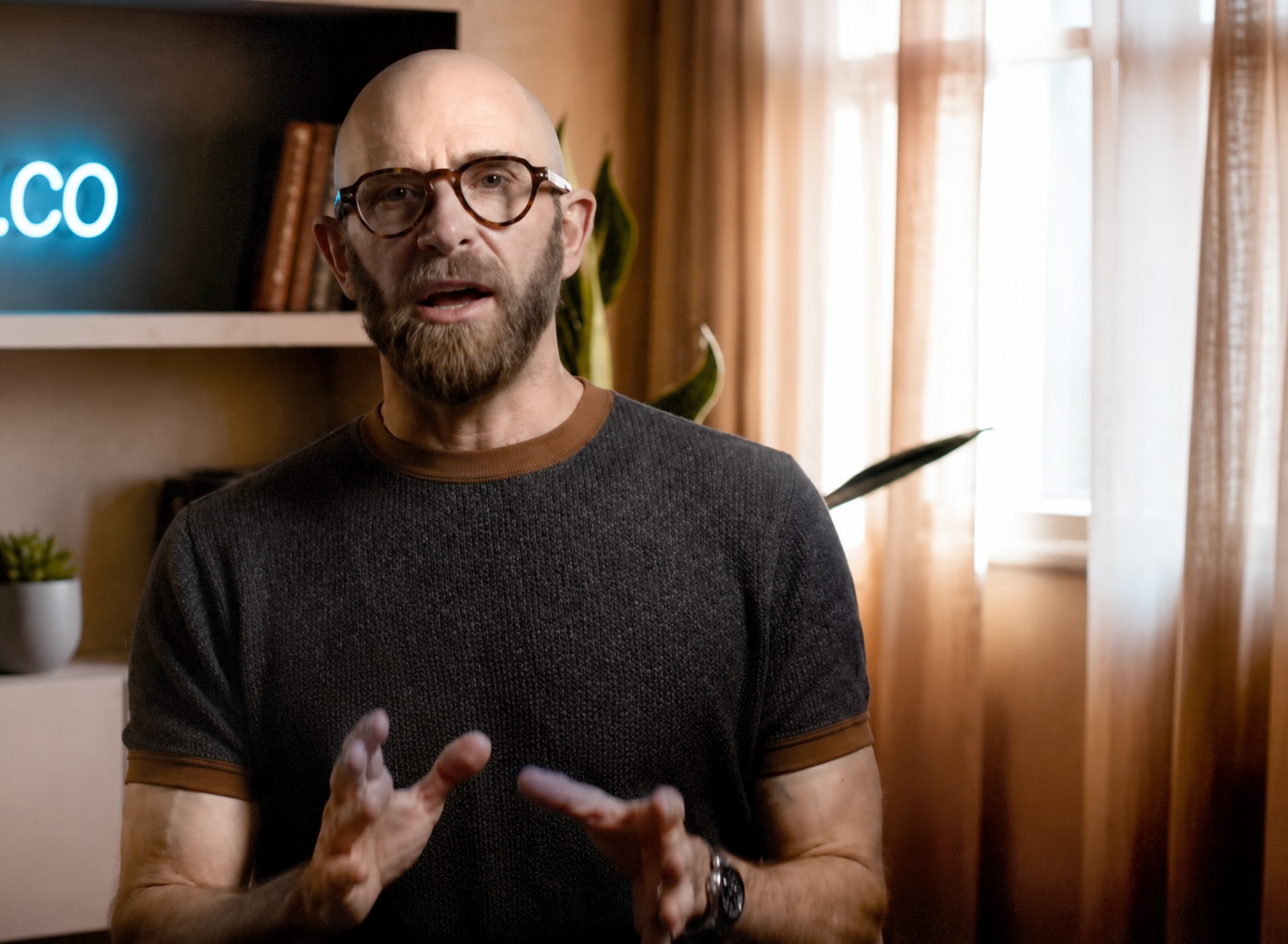
Simon Whistler
Simon Whistler is one of YouTube's most prolific educational creators. WarFronts is his deep dive into geopolitics, conflict analysis, and defense strategy.
Intel Q&A
What happened to Nicolas Maduro and who is now running Venezuela?
In early January, President Trump sent US special forces into Caracas to arrest former President Nicolas Maduro. Vice President Delcy Rodriguez then took over as interim leader. A former Minister of Economy praised for managing the oil industry under sanctions, she has remained in charge past the 90-day point at which her interim government was authorized by the National Assembly.
How has Rodriguez dismantled Maduro’s inner circle?
According to the New York Times, Rodriguez has replaced seventeen ministers, overhauled military leadership, appointed new diplomats, and overseen the detention of at least three businessmen linked to her predecessor. Defense Minister Vladimir Padrino López — who controlled Venezuela’s military for more than eleven years — was demoted to run the agriculture ministry, while figures like Tarek William Saab and Alex Saab were removed from their posts.
Why has Diosdado Cabello, with a $25 million US bounty on his head, kept his position?
Cabello has survived for two reasons. He holds closer ties to Hugo Chávez than even Maduro did — the two were university friends who took part in the 1992 coup together — so keeping him signals residual loyalty to hardline Chavistas. He also controls the ruling party’s repression apparatus, with his cousin heading the Bolivarian Intelligence Service, a network Rodriguez has chosen to preserve rather than dismantle.
Why is the Venezuelan opposition fractured and sidelined rather than in power?
President Trump declined to back the opposition, telling the press it lacked the necessary support to govern. As a result parties have been left fragmented, with some already exploring channels of communication with the Chavistas. Nobel Peace Prize winner Maria Corina Machado, widely seen as Maduro’s likeliest successor, remains in exile and is excluded from Rodriguez’s amnesty law, which exempts those accused of promoting military action against the country.
What is Washington’s stated plan for Venezuela, and what do critics fear?
Secretary of State Marco Rubio has outlined a three-step plan — stabilization, recovery, and transition — but Venezuela appears stuck in the first two phases, with Washington prioritizing economic stability and oil access over near-term elections. Critics, including veteran US diplomat Tom Shannon, fear that every day Rodriguez stays in power is a day Venezuela lacks a true democratic opposition, entrenching what some observers call “Maduroism without Maduro.”
Sources
- https://www.nytimes.com/2026/04/18/world/americas/delcy-rodriguez-maduro-allies-venezuela.html
- https://www.state.gov/releases/office-of-the-spokesperson/2026/01/secretary-of-state-marco-rubio-before-the-senate-committee-on-foreign-relations-on-u-s-policy-towards-venezuela
- https://boz.substack.com/p/delcy-rodriguez-is-like-javier-milei
- https://www.theguardian.com/world/2026/apr/18/venezuelas-machado-to-hold-madrid-rally-as-opposition-frozen-out-after-maduro-capture
- https://www.americanprogress.org/article/marco-rubios-deal-trading-venezuelan-democracy-for-oil/
- https://www.npr.org/2026/01/18/nx-s1-5678974/venezuela-maduro-enforcer-cabello
- https://www.aljazeera.com/news/2026/4/20/spain-venezuela-opposition
- https://www.chathamhouse.org/2026/04/democratic-elections-venezuela-wont-happen-overnight-heres-groundwork-thats-needed-first-2


