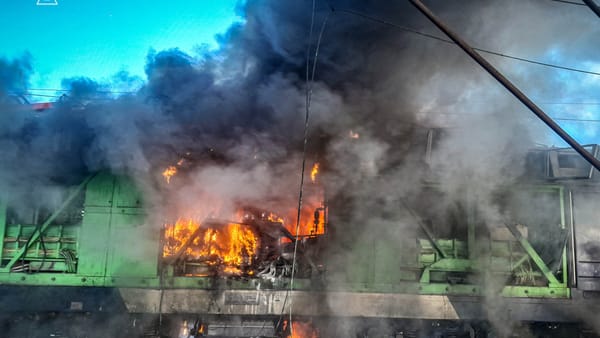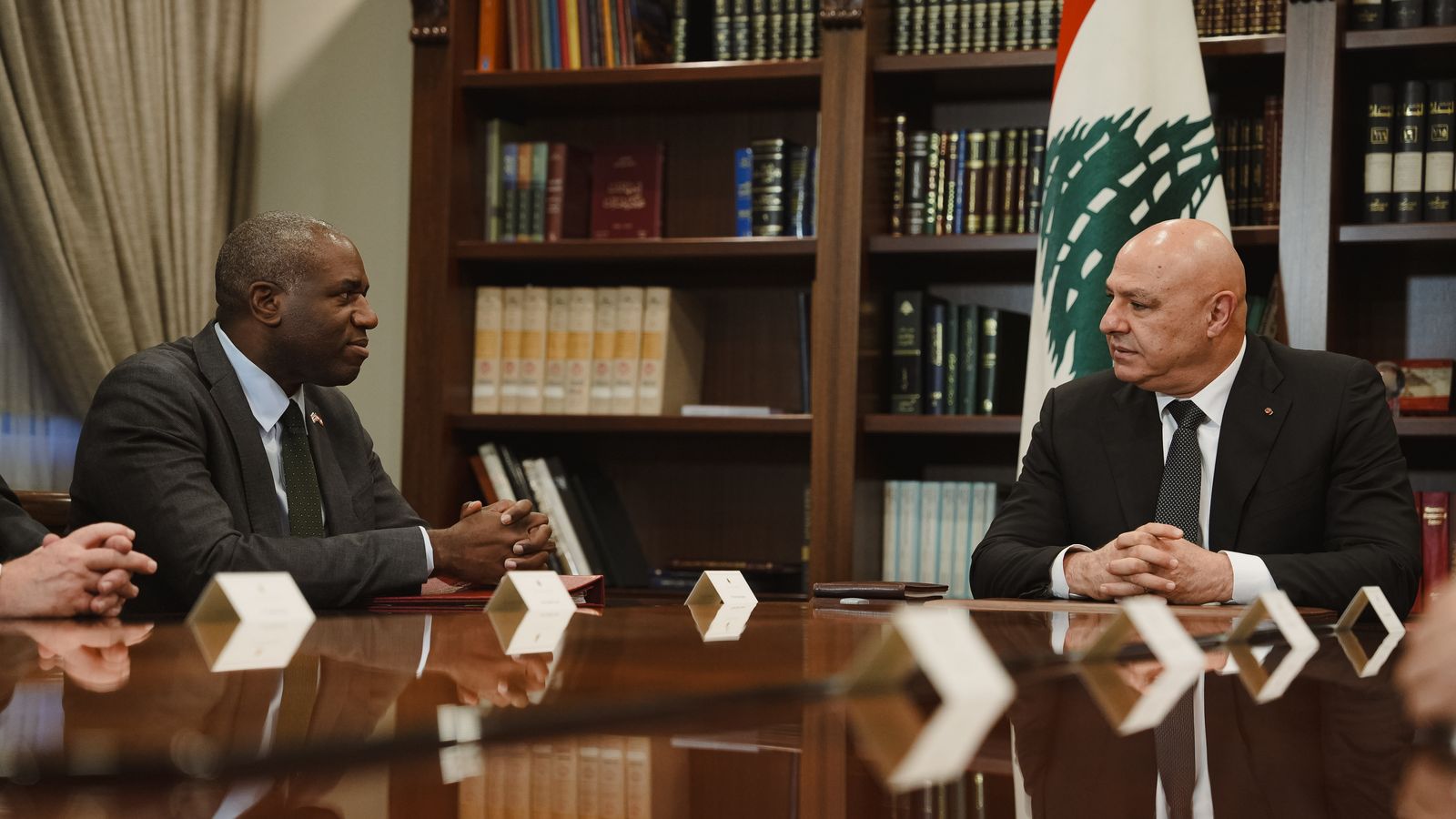
“You’re f*cking crazy… Everybody hates you now. Everybody hates Israel…”
When you hear that quote, the list of people who you might imagine said it likely begins and ends with those who’ve spent their political careers opposing the Jewish state. It likely doesn’t begin with Donald Trump… and yet, the words are all his, in a call with Israeli Prime Minister Benjamin Netanyahu that ultimately led to a shaky ceasefire between Jerusalem and Hezbollah. As is pretty much standard operating procedure for ceasefires in 2026 though, nobody’s on the same page about what exactly was agreed to, so who knows how long it’ll last?
Meanwhile, Israeli forces are still deep inside Lebanon, their Defense Minister has openly floated adopting the Gaza-style approach to areas in the country’s south, and Trump said that he was able to get Jerusalem to call off what he described as a “major raid” by the IDF on Beirut… even as he openly berated Netanyahu.
Situation Brief
- Trump reportedly berated Netanyahu in a profane phone call, demanding a Lebanon ceasefire and claiming he was saving the Israeli leader’s political career.
- Israeli forces advanced north of the Litani River for the first time since 2000, capturing Beaufort Castle and displacing over one million Lebanese civilians.
- Iran suspended negotiations with the US on June 1, making Israel’s Lebanon operations a red line and threatening Houthi closure of the Bab el-Mandeb strait.
- Conflicting interpretations of the ceasefire emerged immediately: Israel limits it to Beirut, Lebanon’s government suggests broader expansion, and Hezbollah demands full withdrawal.
- Rocket fire and drone attacks continued within hours of the announced ceasefire, with Hezbollah using fiber-optic drones that evade Israeli jamming systems.
Past the Litani
Throughout just about the entirety of the war with Iran, there’s been another conflict going on that’s received far less attention: Israel’s campaign against Lebanon. Just to catch you all up on that, shortly after the United States and Israel kicked off their respective campaigns against the Islamic Republic, the Lebanese group Hezbollah decided to join the fray. They began to launch rockets from southern Lebanese territory into Israel—dragging the entire country back into yet another war.
Israel, to the surprise of exactly nobody, responded to the attack—initially on Hezbollah locations in the south of Lebanon, but gradually expanded their strikes to include the Beqaa valley in the East of the country as well as the capital city, Beirut. So far, nearly 3,500 people have been killed, with over 10,000 wounded.
This was always going to be a “make it or break it” moment for Lebanon—the days of pretending that the state could coexist peacefully with Hezbollah’s paramilitary forces are, effectively, over. President Joseph Aoun and Prime Minister Salam have marched in lockstep together, banning the group’s military activities for the war, accusing them of being traitors to their country on behalf of Iran, and making it crystal clear that these are not words they will take back when the conflict comes to a close.
For Israel, though, this attitude was seen as too little, too late. Attacks from Lebanese territory are nothing new—Jerusalem has been struggling to find an effective way to counter them for the better part of half a century at this point, with Israel previously occupying significant parts of Lebanon for nearly two decades. More recently, after a conflict in 2024, they set up a process with the government in Beirut to disarm Hezbollah once and for all.
And despite efforts from the Lebanese Armed Forces, or LAF, to do just that, the group has survived. By some estimates, it was actually rearming faster in other parts of the country than the Army was able to disarm them in the south.
Since the latest war began, though, Jerusalem has pursued some of the most maximalist positions imaginable: multiple senior Israeli politicians, including the Minister of Defense, are calling for the establishment of a Gaza-style “security zone.” Far-right Finance Minister Bezalel Smotrich went further, advocating for all-out annexation of significant portions of the country, all the way up to the Litani river. If implemented, that would represent a loss of roughly 10 percent of Lebanon’s total territory.
This isn’t just an abstract concept, one that exists only on paper in the offices of war planners in Jerusalem. Over the spring, the IDF rolled into southern Lebanon in massive numbers—and while the exact figures are classified, the number of troops involved has been reported to be in the tens of thousands. While there, they got to work destroying at least nine bridges over the Litani—a move Defense Minister Katz ordered to cut what the IDF described as Hezbollah’s supply lines moving fighters and weapons south.
South of the river, bulldozers flattened entire villages: satellite imagery showed the center of Khiam, Bint Jbeil, and many others scraped down to bare dirt. The IDF reported that it’s found weapons caches and tunnels under civilian homes, a known practice used by both Hezbollah and Hamas to increase the cost of engaging their locations.
Since then, wider and wider areas have been cleared of residents, with the largest evacuation orders coming for broad swaths of the country on May 27, including the city of Tyre, one of the oldest continuously inhabited cities on earth. Current estimates put the displaced north of one million, which given that the whole of Lebanon has only some 6 million people, is a staggering number.
Watch on WarFronts
Watch the full video analysis on the WarFronts YouTube channel, presented by Simon Whistler.
But it was the IDF’s push forward late last week that shows how unprecedented this war really is. For the first time since 2000, the IDF went north of the Litani. Within 48 hours, the Golani Brigade had taken the strategically significant Beaufort Castle, a Crusader age structure that long served as the symbol of Israel’s previous 18-year occupation.
The ease with which they were able to capture it is a testament to Hezbollah’s weakened position—the IDF originally failed outright on their first attempt to take the castle back in 1980. It wasn’t until two full years later that they pulled it off in 1982, though at the cost of losing six soldiers to the then-occupying Palestine Liberation Organization. This time, it seemed to go down without a fight. Netanyahu, meanwhile, stood at the northern border and called it a “crushing blow,” later giving the order to “deepen and expand” operations.
And yet, for all that territory they’ve taken, Israel has been unable to stop the shooting. Hezbollah has been leaning hard on small first-person view drones, more and more of them being flown using fiber-optic cables that make the IDF’s jamming equipment completely ineffective. The IDF has struggled to mount a meaningful response, and has fallen back to passing out shotguns for soldiers as a means of last resort.
In recent days, the Critical Threats Project reported that Hezbollah has been continuously expanding the scope of their missile attacks by hitting more densely populated areas deeper in the country, including the city of Karmiel and the Krayot suburbs outside of Haifa.
If this conflict has largely flown under the radar, the discussions between Beirut and Jerusalem have been absolutely invisible. They’ve been ongoing, and if reports are to be believed, at least initially seemed like they could bear real fruit, with the next wave of negotiations set to wrap up in Washington tomorrow afternoon. The big question now is will they bring respite… or simply mark the beginning of another phase in this underreported war?
Tehran Weighs In
In any discussion about the Middle East, it’s just about impossible to avoid mentioning Iran, and this one is no exception. Ever since Operation Epic Fury—Washington’s military campaign against the Islamic Republic—ostensibly came to a close back in early April, there’s been a dispute as to just who the ceasefire is supposed to include. At the heart of that debate sits little Lebanon.
Whether or not that original deal actually does include Lebanon more or less comes down to who you believe: Pakistan, which served as the mediator of the discussions, claimed that, yep, Lebanon was in there alright. But it doesn’t seem to have any one, jointly signed document backing up just what was agreed to in the first place. From there, things largely fractured along predictable lines: the US and Israel were insistent that the deal did not include Lebanon, while Iran maintained that it did. Beirut, for its part, has consistently maintained that Iran was not authorized to negotiate on their behalf.
Tehran has every reason to hold that line though, because Hezbollah is one of the few friends they have in the region, with the group long serving as a key component to Tehran’s military defense strategy. Especially in response to Israel’s recent escalation in Lebanon, Tehran made it a flat-out, take it or leave it red line: if Washington wants a deal, Israel will have to cease its operations.
On paper at least, this isn’t entirely new, but yesterday on June 1st, Tehran made good on their threats: they suspended negotiations and walked away entirely, and even threatened to have their Houthi allies in Yemen close down the Bab el-Mandeb strait as a form of retaliation for Israel’s actions. This Strait is essentially a second, if slightly smaller, Strait of Hormuz at the edge of the Red Sea. Just in case Hormuz wasn’t already enough, right?
By this point, Trump had been posting for half a week that the two were on the cusp of a deal. The memorandum of understanding that’s currently being discussed between Iran and the US would extend the current ceasefire by 60 days, though the full details haven’t been made public. For a moment over the weekend, the president seemed convinced that a deal was right around the corner—going so far as to say that he was lifting the US blockade of Hormuz, though the actual order to do so never went out.
Trump hasn’t been particularly outspoken on the issue of Lebanon historically, so it’s hard to know how much he really cares about it—but he did meet with Beirut’s ambassador to the US the other month during negotiations with her Israeli counterpart. She made a good impression too, he was all smiles when she told him that she wanted his help to “Make Lebanon Great Again.” By and large, he seems committed to getting the Lebanese and Israelis to reach some type of agreement—in part to help Lebanon, in part to present some sort of win out of his campaign in the Middle East, and in part so that it stops being a hang-up in negotiations with Iran.
All of which makes the timing of Israel’s escalation that much harder to read as coincidental. Netanyahu was already furious over the Iran deal itself, or the process to arrive at one—Axios reported that after a call with Trump on May 20th, his “hair was on fire” and he was pushing hard to resume military operations against Iran rather than negotiate at all. Within days, the campaign in Lebanon escalated about as hard as it could, all of it landing in the same window as both that memorandum and the Israel-Lebanon talks set for this week.
For the annexation wing of Netanyahu’s coalition, blowing up both tracks at once serves the same end: no Lebanese government, much less a hardline sovereigntist one, is going to sit across a table and ratify the loss of its own territory, and no Iran deal would get closed with operations like that underway.
Taking all this together, one can’t imagine that Trump was exactly thrilled to see negotiations with Iran collapse yet again, this time over Jerusalem’s ongoing campaign.
But even for 2026’s standards of “didn’t see that coming,” the news that broke yesterday was a real doozy. That’s right, it’s time to discuss that sweary phone call.
The Phone Call
There’s a lot of things that you can say about Donald Trump. Just what those are will determine heavily on your priors, but “frequent Israel critic” isn’t likely to top your list.
That reputation has been well earned: throughout both terms of his presidency, Trump has been one of the most consistently pro-Israel American presidents in history. This support has also bought him influence over Israel that previous presidents largely lacked, which he has occasionally put to use to restrain Jerusalem when it suits him. The most high-profile example of this was in the aftermath of the Twelve Day War last summer—Israel was ready to launch an all-out campaign against the Islamic Republic then and there, whereas Trump insisted that they try negotiations. When Jerusalem put up a stink, he simply ignored them, publicly announcing that a ceasefire was in effect that Israel had agreed to, and that was that.
This time around, Trump called Netanyahu to tell him what he needed in Lebanon—another ceasefire, and he was willing to get in touch with Hezbollah to work out a two-way agreement where both would agree to stop attacking. By the looks of it, Netanyahu agreed—within the hour, Trump was announcing that there was a ceasefire, though the details here are, as always, murky.
Trump went further, claiming that the ceasefire had turned around a “major raid” by IDF ground forces that were, allegedly, on the march north to Beirut itself. Israeli sources denied that any such attack was underway, so it ultimately comes down to a who do you believe situation—but let us be clear, any Israeli invasion of Beirut would have been a big f*cking deal that would almost certainly have collapsed the peace negotiations ongoing between Beirut and Jerusalem.
These requests made to the two groups are not, however, symmetrical. Hezbollah stopping its attacks would mean a pause—the group lives to fight another day, which they’re not exactly going to complain about. Israel stopping the campaign, on the other hand, would mean shelving the goals it had spent the entire spring bleeding for, with no guarantee it ever really gets to go back into it.
That disparity might help to understand why Netanyahu was so incensed by the request in the first place, but the phone call apparently got very, very heated. According to Axios, Trump had had it with his Israeli counterpart and his consistent hardline approach to all issues across the board, saying:
“You’re f*cking crazy. You’d be in prison if it weren’t for me. I’m saving your ass. Everybody hates you now. Everybody hates Israel because of this.”
Talk about saying the quiet part out loud. And while we can’t independently verify this quote, it was widely reported through reputable outlets, and led the well-connected Mark Levin, a longtime Trump and Netanyahu supporter, to post that the leak was a violation of federal law—in other words, nobody’s even bothering to deny it’s genuine.
Whether or not this new ceasefire actually holds in Lebanon is anyone’s guess, but early signs are not promising. Once again, it seems that different parties are on different pages about just what is included in the deal: Israel has said that they agreed to cease their attacks on the capital, but would proceed as planned with their operations in the south of the country.
The Lebanese government seemed to be on a similar-ish but not identical page. The Office of the Lebanese President posted on X that Israeli strikes on Beirut would cease immediately, which would be “expanded to encompass all Lebanese territories,” though this doesn’t specify a time or deadline to actually do that.
The bigger wild card here is Hezbollah, who seem to have been reading off of an entirely different page. One of the groups’ Members of Parliament, Hassan Fadlallah, claims the ceasefire covers all of Lebanon, not just Beirut—and that anything short of a full Israeli withdrawal from the country would be unacceptable to Hezbollah.
If true, that would almost certainly be a non-starter, and we’d all be right back to square one, with only the headline of the century about a Trump-Netanyahu phone call to show for it. It’s too early to call it quits on the thing entirely, as the Hezbollah MP is not the group’s leader and may have simply himself been on the wrong page about the deal, or lying to save face with their supporters.
But the early signs, at least at time of recording, are not encouraging. In the early hours of June 2nd Central European Time, the Times of Israel was reporting that rocket warning sirens were blaring across numerous northern communities, and that the IDF shot down at least two Hezbollah rockets fired toward the Safed area in the Galilee.
Regardless of if this ceasefire is able to stand the test of time, or collapses back in on itself, this has been a wild turn in the otherwise extremely close US-Israel relationship. Trump has flexed muscle against Netanyahu before, but never like this—and given that the Israeli PM is under attack from his friends in Washington and from his coalition back home, it’s difficult to see how he threads the needle much longer. Netanyahu’s return to office has seen him take on an insane number of adversaries at the same time—and for a while, he looked like he might be able to pull it off. But his closest ally just effectively told him to go f*ck himself—and you better believe the rest of the world was listening.
Where that leaves the relationship between Trump and Netanyahu—and the war they’re supposed to be fighting together—is a question that neither one of them seems particularly ready to answer. And the rest of us will only likely find out when and if the bombs start falling again.
Key Takeaways
- Trump reportedly berated Netanyahu in a profane phone call, demanding a Lebanon ceasefire and claiming he was saving the Israeli leader’s political career.
- Israeli forces advanced north of the Litani River for the first time since 2000, capturing Beaufort Castle and displacing over one million Lebanese civilians.
- Iran suspended negotiations with the US on June 1, making Israel’s Lebanon operations a red line and threatening Houthi closure of the Bab el-Mandeb strait.
- Conflicting interpretations of the ceasefire emerged immediately: Israel limits it to Beirut, Lebanon’s government suggests broader expansion, and Hezbollah demands full withdrawal.
- Rocket fire and drone attacks continued within hours of the announced ceasefire, with Hezbollah using fiber-optic drones that evade Israeli jamming systems.

Simon Whistler
Simon Whistler is one of YouTube's most prolific educational creators. WarFronts is his deep dive into geopolitics, conflict analysis, and defense strategy.
Intel Q&A
What did Trump reportedly say to Netanyahu during their phone call about Lebanon?
According to Axios, Trump told Netanyahu: “You’re f*cking crazy. You’d be in prison if it weren’t for me. I’m saving your ass. Everybody hates you now. Everybody hates Israel because of this.” This was during a call where Trump demanded a ceasefire in Lebanon and claimed he got Jerusalem to call off a “major raid” by the IDF on Beirut.
How many people have been killed and wounded in Israel’s campaign against Lebanon?
So far, nearly 3,500 people have been killed, with over 10,000 wounded in Israel’s campaign against Lebanon.
What territorial ambitions have Israeli politicians proposed regarding Lebanon?
Multiple senior Israeli politicians, including Defense Minister Katz, have called for establishing a Gaza-style “security zone.” Far-right Finance Minister Bezalel Smotrich went further, advocating for annexation of significant portions of Lebanon all the way up to the Litani river, which would represent a loss of roughly 10 percent of Lebanon’s total territory.
What significant military achievement did the IDF accomplish for the first time since 2000?
For the first time since 2000, the IDF went north of the Litani River. Within 48 hours, the Golani Brigade captured the strategically significant Beaufort Castle, a Crusader age structure that long served as the symbol of Israel’s previous 18-year occupation. Netanyahu called it a “crushing blow” and ordered operations to “deepen and expand.”
How many people have been displaced in Lebanon due to the conflict?
Current estimates put the displaced north of one million people. Given that the whole of Lebanon has only some 6 million people, this is described as a staggering number. The largest evacuation orders came on May 27, including for the city of Tyre, one of the oldest continuously inhabited cities on earth.
Why did Iran suspend negotiations with the US on June 1st?
Iran suspended negotiations and walked away entirely on June 1st because of Israel’s escalation in Lebanon. Tehran had made it a red line that if Washington wants a deal, Israel will have to cease its operations in Lebanon. Iran also threatened to have their Houthi allies in Yemen close down the Bab el-Mandeb strait as retaliation for Israel’s actions.
What new tactic has Hezbollah been using that makes IDF jamming equipment ineffective?
Hezbollah has been increasingly using small first-person view drones flown with fiber-optic cables, which makes the IDF’s jamming equipment completely ineffective. The IDF has struggled to mount a meaningful response and has fallen back to passing out shotguns for soldiers as a means of last resort.
What was Netanyahu’s reaction to the Iran deal process according to reports?
Axios reported that after a call with Trump on May 20th, Netanyahu’s “hair was on fire” and he was pushing hard to resume military operations against Iran rather than negotiate at all. Within days, the campaign in Lebanon escalated significantly.
What are the differing interpretations of what the Lebanon ceasefire covers?
Israel stated they agreed to cease attacks on Beirut but would proceed with operations in the south. The Lebanese President’s office posted that Israeli strikes on Beirut would cease immediately and be “expanded to encompass all Lebanese territories” without specifying a timeline. Hezbollah MP Hassan Fadlallah claimed the ceasefire covers all of Lebanon and that anything short of full Israeli withdrawal would be unacceptable.
What happened in the early hours of June 2nd regarding the ceasefire?
In the early hours of June 2nd Central European Time, the Times of Israel reported that rocket warning sirens were blaring across numerous northern communities, and that the IDF shot down at least two Hezbollah rockets fired toward the Safed area in the Galilee, suggesting the ceasefire was already faltering.
Sources
- Original WarFronts video: Has Netanyahu gone too far in Lebanon?
- https://www.timesofisrael.com/liveblog_entry/trump-said-to-call-netanyahu-fking-crazy-while-demanding-lebanon-truce-im-saving-your-ass-everybody-hates-you-now/
- https://x.com/sentdefender/status/2061615955805933801
- https://www.criticalthreats.org/analysis/iran-update-evening-report-may-31-2026
- https://www.thenationalnews.com/news/mena/2026/06/01/israels-military-set-to-resume-strikes-on-beirut/
- https://www.timesofisrael.com/liveblog_entry/lebanon-israel-wont-strike-beirut-ceasefire-to-be-expanded-to-rest-of-country/
- https://www.timesofisrael.com/liveblog_entry/trump-thanks-netanyahu-for-agreeing-to-call-off-major-raid-of-beirut/
- https://www.timesofisrael.com/liveblog_entry/sirens-sound-in-kiryat-shmona-other-border-towns-amid-hezbollah-rocket-and-drone-attack/
- https://www.timesofisrael.com/liveblog_entry/idf-says-it-downed-2-hezbollah-rockets-fired-toward-safed-drone-appears-to-strike-military-post-in-western-galilee/
- https://www.timesofisrael.com/liveblog_entry/idf-troops-raise-israeli-golani-flags-over-beaufort-castle-in-south-lebanon/
- https://www.nytimes.com/2026/05/31/world/middleeast/israel-lebanon-beaufort-iran.html
- https://www.timesofisrael.com/liveblog_entry/katz-says-israel-will-demolish-lebanon-border-villages-create-gaza-style-buffer-zone/
- https://www.aljazeera.com/news/2026/3/23/smotrich-urges-israel-to-annex-southern-lebanon-as-assault-intensifies
- https://www.jns.org/news/israel-news/israel-orders-all-litani-river-bridges-destroyed-to-hem-in-hezbollah
- https://www.cnn.com/2026/05/27/world/live-news/iran-war-us-news
- https://www.cnn.com/2026/04/24/middleeast/lebanon-destruction-israel-gaza-model-intl-cmd
- https://www.bbc.com/news/articles/cj3pgrpmlklo
- https://www.middleeasteye.net/live-blog/live-blog-update/massive-displacement-lebanese-capital-after-netanyahu-threatened-hit
- https://www.ynetnews.com/article/bj11chqylfx
- https://www.timesofisrael.com/liveblog_entry/weve-returned-stronger-than-ever-netanyahu-hails-capture-of-beaufort-castle-in-lebanon-vows-dramatic-shift-in-policy-on-hezbollah/
- https://www.jpost.com/defense-and-tech/article-897569
- https://www.state.gov/releases/office-of-the-spokesperson/2026/05/second-meeting-between-the-governments-of-the-united-states-lebanon-and-israel/
- https://www.naharnet.com/stories/en/319409-salam-says-only-state-can-negotiate-for-lebanon-aoun-seeks-ceasefire-inclusion
- https://www.washingtonpost.com/world/2026/06/01/iran-us-trade-strikes-deal-end-war-remains-elusive/
- https://www.i24news.tv/en/news/israel/diplomacy-defense/artc-netanyahu-s-hair-was-on-fire-after-tense-call-with-trump-as-us-sidelines-iran-strike-in-favor-of-deal-report
- https://truthsocial.com/@realDonaldTrump/posts/116676034049614301
- Hero image source by Foreign, Commonwealth & Development Office / openverse, by.