
The Siege of Crimea Is Working
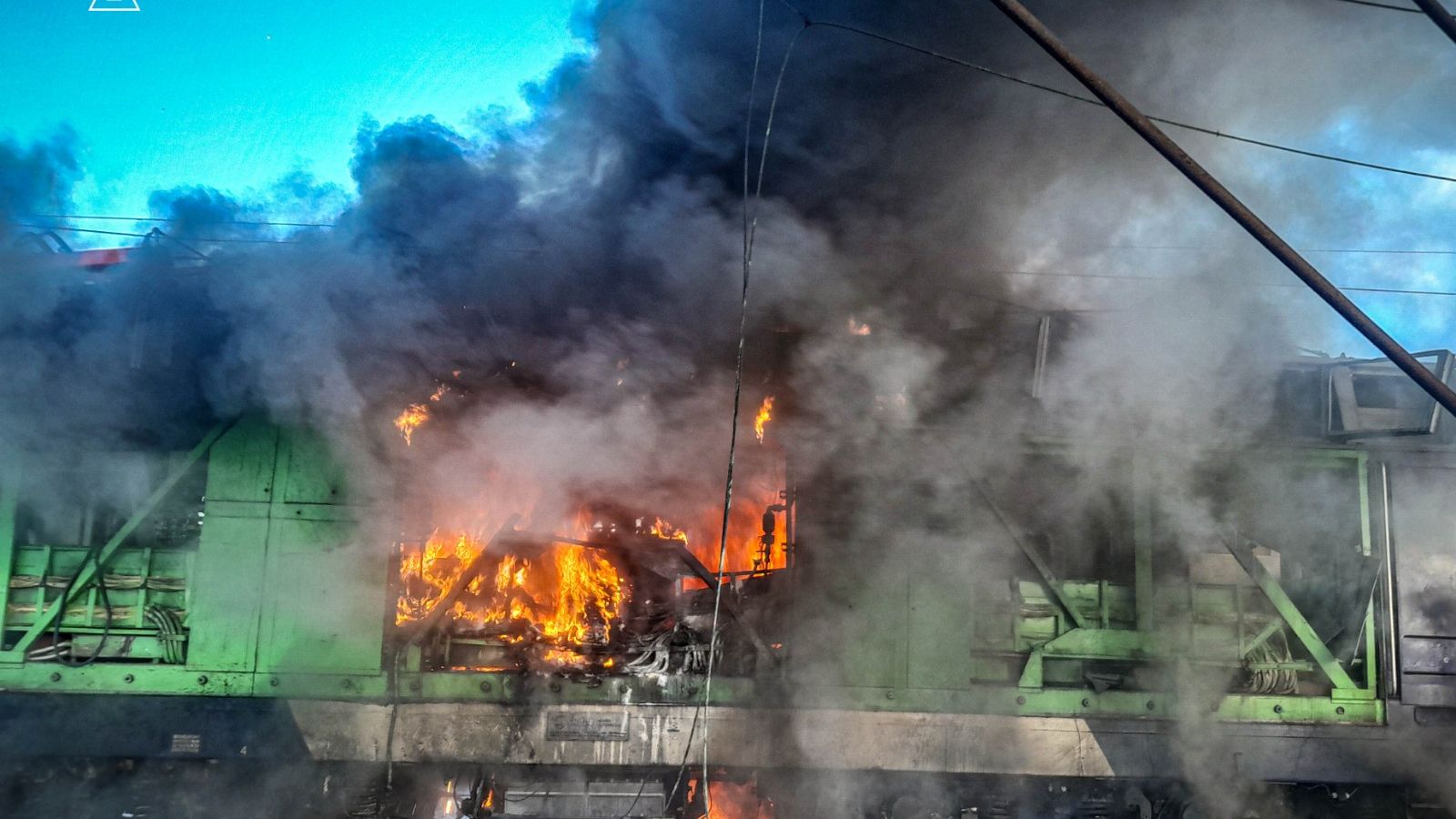
Life in occupied Crimea is beginning to break down, and Russia has no idea how to stop it. Across the last couple of months, and especially in the span of the last few weeks, Ukrainian forces have hammered the Crimean peninsula at long range, in a constant barrage of drones and missiles that’s only getting more intense by the day. The fuel supply has run out, tens of thousands of people are trying to escape while they can, and chaos, panic, and even hunger, are starting to really set in.
Ukraine’s intention isn’t to invade Crimea and take it back—or, at least, not yet. Instead, Ukraine intends to make Crimea truly, completely ungovernable, and force its Russian occupiers into a state of total breakdown.
But through its long-range siege of the territory, Ukraine hopes to do more than simply degrade the Russian military. Instead, Kyiv is trying to lure Moscow into a trap—and, right now, the strategy seems to be working flawlessly. Russia has occupied Crimea since 2014, and regards it as annexed Russian territory; it’s the crown jewel of Vladimir Putin’s military project in Ukraine, and the pride and joy of the Russian elite. To defend Crimea, is an increasingly costly and dangerous proposition—but to abandon Crimea, is unthinkable.
Situation Brief
- Ukraine’s long-range drone and missile attacks are causing significant breakdowns in occupied Crimea.
- Ukraine’s strategy aims to make Crimea ungovernable, forcing Russia into a costly defense trap.
- Ukraine’s mid-range drones have disrupted Russian supply lines, targeting key highways and bridges.
- Russia faces a dilemma: defending Crimea is costly, but abandoning it is politically unthinkable.
- Ukraine’s campaign is affecting Russian military operations in southern Ukraine, leading to withdrawals.
The trouble for Russia, of course, is that that’s exactly what Ukraine is betting on.
Attack of the Drones
A few months before this was written, something changed on the battlefields of eastern Ukraine. After years of fast-paced, highly innovative drone warfare near the front lines, Kyiv unveiled a new suite of drones that were optimized for a different purpose: not to attack at short or long range, but at mid-range. AI-enabled, cheap to use in massive numbers, and surprisingly fast, the new drones subverted many of the expectations that both sides of this war had learned to live by. Russian jamming was no longer effective, and Ukraine no longer had to worry about maintaining a heavy, cumbersome connection to its drones through fiber-optic cables. At the start of the spring fighting season, Ukraine used its new toys for a very specific purpose: to undercut the supply lines and logistics that would have powered a massive Russian spring offensive, and throw that offensive into complete disarray. But by this May, Ukraine had secured drone dominance in the eastern Donbas region, where the main thrust of Russia’s offensive was supposed to take place. The fighting in that area still continues, and Russia is grinding forward incredibly slowly, at massive cost—in a war where, according to recent posts by Russian military bloggers, Moscow’s troops along some parts of the front line have a life expectancy of twenty to thirty-five minutes, once they reach the front line. Now that Ukraine has established control of the situation there, its mid-range drone forces have a bit of spare capacity…and most of that capacity is now focused on Crimea.
Now, to understand the way that Ukraine’s structured its Crimea campaign, we first have to understand something about this plot of territory: It’s relatively isolated, mostly surrounded by water, and has no natural land connection to the Russian mainland. That’s a problem that the Kremlin has worked very hard to try and rectify, first by establishing reliable ferry and ship infrastructure, then by building the prized Kerch Strait Bridge that opened in 2018, and finally, by constructing a network of highway and rail lines that run through the occupied Ukrainian east. Those routes in occupied territory have been especially important; they’ve made the Kerch bridge into less of a practical target for Ukraine, and they’ve greatly increased the volume of supplies, fuel, and fighting equipment that can get to the peninsula. But because of the way that this war had gone before 2026, Russia’s ambitions in Crimea could basically be summed up as guard duty. The Black Sea fleet had been mostly forced to abandon the area, because of the constant threat of Ukrainian sea drones, but Russia’s front lines were holding, the routes through occupied territory were safe, and Ukraine had neither the manpower, nor the positional advantages, that would allow for a direct assault on the area.
So, when Ukrainian mid-range drones started to target Crimea, they didn’t focus on the territory itself, as much as they focused on the supply chain. Those routes through occupied territory—and especially a key highway known as the R-280—were well within range of Ukrainian drones. The routes weren’t unguarded, exactly, but they were minimally guarded, with mobile air-defense teams using machine guns, and a handful of more capable surface-to-air systems. Ukraine turned its attention to the R-280, and the rest was history. Open-source trackers indicate that many hundreds of supply and fuel trucks have been confirmed destroyed along the highway, and the true total is probably somewhere in the thousands. Ukraine’s been especially diligent about striking fuel convoys, which sustain Crimea’s military defense, but also its civil energy infrastructure. They went after train locomotives, as well as the railway lines themselves. Ukraine also started targeting the road and rail bridges that lead into Crimean territory, across a treacherous wetland area.
As it turned out, Russia lacked the ability to really do anything about the Ukrainian offensive—and as Ukraine’s campaign started to generate real results, Russia found itself unable to right the ship. Instead, the strikes have had a compounding effect, with every Ukrainian hit, making subsequent hits more likely. With the R-280 highway growing too dangerous, Russia has had to push its trucks onto back roads, where they have to drive much slower, and create wear and tear on asphalt that’s not built to handle them. Russia is thought to have lost hundreds of well-trained truck drivers, who were tasked with doing a job that’s much more difficult than global observers tend to give credit. Every destroyed bridge, makes the surviving bridges more important, but also reduces the number of spots that Ukraine needs to surveil—meaning that those bridges are more easily targeted. The Russian military has tried to respond by using pontoon bridges, but those are getting blown up too. They’ve tried to shift to ferries, but Ukrainian strikes have now forced the ferry service to shut down. Better yet for Ukraine, Russia’s reaction to devastating strikes elsewhere—especially at a critical refinery in Moscow—has been to shift its air defense systems back toward Russia’s biggest cities. With finite air defenses available, that’s only made Ukrainian strikes on Crimea easier to accomplish. And as Ukraine destroys more infrastructure across Russia, and creates acknowledged fuel shortages in the vast majority of Russian oblasts, there’s even less excess to go around. What Crimea has, and what Russia can supply in the immediate vicinity, becomes even more valuable…so, it becomes even more costly to lose.
Watch on WarFronts
Watch the full video analysis on the WarFronts YouTube channel, presented by Simon Whistler.
And now that the stage has been properly set, Ukraine’s drones have started pummeling Crimea itself. Over the course of several weeks, Ukraine destroyed all of Crimea’s above-ground fuel storage capacity, along with power stations, electrical wires, and other hard-to-replace energy assets. Crimea’s leaders imposed limits on the amount of fuel that could go to civilians, then required vouchers that only government employees could easily access, and now, even the vouchers don’t count for much. Satellite imagery and traffic mapping indicate that when people do get enough fuel to drive, they’re mostly headed to the Kerch Strait Bridge, waiting in long lines of traffic to try and reach safer territory. And by Crimean occupied leaders’ own admission, the drone strikes are now constant. Quoting one official, during a radio broadcast from the territory, Crimea’s air defense sirens don’t go off anymore because “sirens would be sounding 22 hours a day and nobody would get any sleep.” At this point, Ukrainian operations would seem to suggest that they’re running out of high-value energy targets on the peninsula itself. They’re still keeping up the pressure, destroying water infrastructure, communications equipment, and more, but at the same time, Ukrainian strikes have started to expand laterally, toward the nearest Russian territory. There, Ukraine is destroying the oil refineries that prepare the fuel destined for Crimea, forcing trucks and trains to take longer, slower, and more obvious journeys—and raising the real possibility that they might be next.
At every stage of this campaign, Ukraine’s drone tactics come back to one simple, but unavoidable principle: Thinning the herd. Unlike the situation on the front lines, where Russia doesn’t particularly value the lives of its troops, and clearly considers them to be expendable, Ukraine is now targeting finite resources that Russia regards as essential. No matter what, Russia must keep moving fuel and supplies to Crimea, and it must keep as many of its refineries and other facilities operational, as possible. That means there isn’t really a world where Ukraine deters Russia so completely, that it just moves its valuable resources into safer areas outside drone-range. Russia is under pressure to push resources into the conflict zone, despite the danger—so, everything Ukraine destroys, makes future drone strikes even easier. Bridges, for example, are chokepoints; blow up half of them, and the rest will have to handle double the traffic. Trucks, in ordinary times, saturate the roads, and individual trucks and their drivers can try to hide in a crowd. But when there’s only a couple of trucks on the road, Ukraine only needs to put a few drones in the sky, in order to keep up. Destroy a few refineries, and Ukraine can expect the others to be working at full capacity when they’re eventually hit, because Russia has no choice but to try and fill its shortfalls somehow.
Decay and Dismay
As we’ve already laid out, Ukraine’s strikes against Crimea don’t happen in a vacuum. Crimea is in such an acute state of crisis, because Ukraine is chipping away at the much larger network that sustains the peninsula, whether from the occupied territories or from mainland Russia. But that’s hardly a one-way relationship, and now, the impact of the long-range Crimea campaign is starting to show up elsewhere.
Russia’s biggest challenges have come on the front lines, especially in the southern oblasts of Kherson and Zaporizhzhia. These are areas where the fighting has been relatively less intense, compared to what’s happening in Donetsk, but Ukrainian and Russian forces are still continually engaged in combat. Those Russian soldiers rely on Crimea as a supply base, and a rear logistical hub—where, before the recent changes, Russian commanders could count on consistent deliveries and other forms of support. But when Ukraine destroys the infrastructure that brings fuel into Crimea, it also destroys the infrastructure that would allow military supplies to move out. According to both the Russian milblogger class, and the reports emerging from the Ukrainian side of the front line, Russia’s troops in that area are under extraordinary pressure. At the start of the year, Ukrainian troops achieved several limited victories and territorial recaptures in the south, but now, Russian troops are starting to withdraw from key territory without a fight. The prime example of that change, is what’s happened on the Kinburn Spit—a long, thin sandbar that stretches out toward the mouth of the major river that marks a portion of the front line. There, Russia was forced to abandon several key positions, and Ukraine has even managed to place a flag on the territory, although the sandbar remains contested, for now.
Meanwhile in Moscow, Russian leaders have continued to helpfully illustrate just where Crimea fits into their hierarchy of important territories. It’s less important than Moscow or St. Petersburg, of course, and Putin isn’t yet willing to abandon the front line, in order to make sure that Crimea is protected. But as we’ve alluded to, Crimea is extremely important to Russia in its own right. It’s a highly symbolic territory, both because it represents the pinnacle of Russian conquest, and because it’s been held up as such a clear success case for the cultural Russification of the occupied territories. It’s very important to Russian elites, as a high-demand vacation spot, and for the Russian military, as a supply hub, a base for the Black Sea fleet, and a strategic anchor in a complex, important part of the ocean. Even worse, Moscow has poured immense sums of money into the territory, to remake it in the Russian image, connect it to Russian territory, and increase its perceived value and importance, in the eyes of the Russian people. As a former Ukrainian Minister of Defense, Andriy Zagorodnyuk, explained it to the Wall Street Journal: “For Putin, Crimea is turning from an asset to a liability. This was his signature acquisition, and he is unable to exercise control”.
For all those reasons, Russia really can’t stop itself from defending Crimea…but this is exactly the Ukrainian trap that we mentioned earlier. It costs Ukraine very little to keep hitting the peninsula, especially in a long-range campaign where Ukrainian soldiers aren’t at immediate risk. Russia, meanwhile, has to keep on pouring air defenses, fuel, soldiers, and supplies into Crimea by any means necessary, including by replacing trucks, ferries, and even bridges, wherever it can. Abandoning Crimea, is not an option; that’s an admission of defeat that Putin couldn’t hide, and that his military operation probably wouldn’t survive. The only path forward, is to continue pouring resources into the territory in hopes that something might change on the Ukrainian side. Right now, though…there just isn’t any sign that Ukraine would start slowing down.
With all of that being said, we do want to emphasize that a Ukrainian ground operation to retake Crimea, remains highly unlikely in the near term. Ukraine faces several strategic and tactical barriers that would make an offensive nearly impossible: serious and chronic manpower shortages, substantial occupied territory between Crimea and the Ukrainian front lines, and the fact that because Ukraine destroyed the bridges onto the peninsula, it would have no choice but to attempt an extremely risky amphibious landing. But right now, Ukraine doesn’t need to reclaim Crimea directly, and the resource trap that Ukraine has built for Russia, might actually be more valuable in the long run. After all, if Ukraine keeps up the pressure and continues to make Russia bleed, then an eventual operation to retake Crimea will just keep getting easier and easier.
There is, however, one major symbolic victory that Ukraine might try to achieve relatively soon: the permanent destruction of the Kerch Strait Bridge. Recently, Ukraine has kept up pressure on the bridge, launching enough drones in that direction to keep local defenders on guard, but it hasn’t really been a primary target…and that’s for good reason. According to Ukrainian intelligence officials, the bridge has been structurally compromised for some time, which is part of why Russia’s restricted the transfer of heavy loads, especially fuel, more recently. But by destroying all of the other bridges and mechanisms that Russia’s been relying on to transfer fuel, Ukraine creates the same critical bottleneck that it’s made everywhere else. Soon enough, Russia will have only two choices: ship fuel across the compromised bridge, or don’t provide fuel to Crimea at all. The trouble, of course…is that those fuel shipments can be targeted, and if Ukraine manages to strike a large shipment at the right time, then it can convert that Russian fuel into a massive bomb, on a compromised bridge that would have become Crimea’s final lifeline.
As of today, the bridge is overwhelmed by those traffic jams we mentioned earlier: thousands of civilians who’ve realized that it’s time to leave. For that reason, Ukraine isn’t likely to strike the bridge at the height of the evacuation. But once that traffic thins out, and there’s less stress on the bridge apparatus itself, Russia might try to bring large shipments across—providing the opportunity that Ukraine has been trying to create. Or, maybe Russia doesn’t take the risk…and Crimea runs out of fuel, and then air defenses, and then, perhaps even soldiers. For Moscow, it’s a lose-lose proposition…but then again, that’s what the Siege of Crimea was built to create.
Key Takeaways
- Ukraine’s long-range drone and missile attacks are causing significant breakdowns in occupied Crimea.
- Ukraine’s strategy aims to make Crimea ungovernable, forcing Russia into a costly defense trap.
- Ukraine’s mid-range drones have disrupted Russian supply lines, targeting key highways and bridges.
- Russia faces a dilemma: defending Crimea is costly, but abandoning it is politically unthinkable.
- Ukraine’s campaign is affecting Russian military operations in southern Ukraine, leading to withdrawals.

Simon Whistler
Simon Whistler is one of YouTube's most prolific educational creators. WarFronts is his deep dive into geopolitics, conflict analysis, and defense strategy.
Intel Q&A
What is the current situation in occupied Crimea?
Life in occupied Crimea is breaking down due to a constant barrage of drones and missiles from Ukrainian forces. The fuel supply has run out, tens of thousands of people are trying to escape, and chaos, panic, and hunger are setting in.
What is Ukraine’s strategy regarding Crimea?
Ukraine aims to make Crimea ungovernable by targeting its supply chains and infrastructure, forcing Russian occupiers into a state of total breakdown. The goal is to lure Moscow into a trap where defending Crimea becomes increasingly costly and dangerous.
How have Ukrainian drones been used in the conflict?
Ukraine has developed mid-range drones that are AI-enabled, cheap to use in massive numbers, and fast. These drones have been used to target supply lines and logistics, disrupting Russian operations and establishing drone dominance in the eastern Donbas region.
What is the significance of the Kerch Strait Bridge?
The Kerch Strait Bridge is a critical infrastructure connecting Crimea to mainland Russia. It has been targeted by Ukrainian drones, and its destruction would severely impact Russia’s ability to supply Crimea.
How has the siege of Crimea affected Russian military operations?
The siege has forced Russia to divert resources to defend Crimea, making it difficult to sustain other military operations. Russian troops in southern oblasts like Kherson and Zaporizhzhia are under extraordinary pressure due to the disruption of supply lines.
What are the long-term implications of Ukraine’s strategy in Crimea?
Ukraine’s strategy aims to weaken Russia’s hold on Crimea over time, making a future operation to retake the peninsula easier. By continuing to pressure Russia, Ukraine can force it to bleed resources, potentially leading to a more favorable outcome in the long run.
Why is Crimea important to Russia?
Crimea is highly symbolic for Russia as it represents the pinnacle of Russian conquest and has been held up as a success case for cultural Russification. It is also important for the Russian military as a supply hub and a base for the Black Sea fleet.
What challenges does Russia face in defending Crimea?
Russia faces significant challenges in defending Crimea, including the constant threat of Ukrainian drone strikes, the need to maintain supply lines, and the high cost of defending the peninsula. Abandoning Crimea is seen as unthinkable, but defending it is increasingly costly and dangerous.
How has the siege of Crimea affected civilian life?
The siege has led to a breakdown in civilian life, with fuel shortages, power outages, and a mass exodus of people trying to escape the peninsula. The constant drone strikes have created a state of chaos and panic among the population.
What is the current status of the Kerch Strait Bridge?
The Kerch Strait Bridge is overwhelmed by traffic jams as thousands of civilians try to leave Crimea. Ukraine is likely to target the bridge once the traffic thins out, potentially turning a large fuel shipment into a massive bomb on the compromised bridge.
Sources
- Original WarFronts video: Ukraine Has Placed Crimea Under Siege
- https://samf.substack.com/p/how-do-you-solve-a-problem-like-crimea
- https://www.economist.com/europe/2026/06/23/russias-crimean-conquest-is-turning-into-a-deadly-mess
- https://www.wsj.com/world/russia/crimea-ukraine-russia-war-484d7827
- https://cepa.org/article/the-siege-of-crimea/
- https://kyivindependent.com/how-ukraines-drone-blockade-of-crimea-is-pressuring-russias-hold-on-the-peninsula/
- https://www.thetimes.com/world/russia-ukraine-war/article/putin-losing-crimea-russia-state-of-emergency-ukraine-68c9pj7lv
- https://www.ft.com/content/0ea7f48c-172c-443f-9896-1e77c2a8d065?syn-25a6b1a6=1
- https://www.bbc.com/news/articles/cy06495y2lko
- https://euromaidanpress.com/2026/06/23/the-fuel-blockade-tightens-kerch-struck-again-power-knocked-out-across-occupied-crimea/
- https://www.wsj.com/world/europe/russians-feel-the-wars-hardships-as-ukraine-pummels-crimea-b59510f1
- https://www.thebulwark.com/p/the-wheels-are-coming-off-putin-ukrain-war-crimea
- https://www.newsweek.com/putin-crimea-russia-ukraine-war-zelensky-12139411
- https://www.telegraph.co.uk/news/2026/06/28/crimea-could-bring-the-west-into-a-showdown-with-russia/
- https://www.aljazeera.com/video/inside-story/2026/6/27/why-is-crimea-critical-to-the-russia-ukraine
- https://www.kyivpost.com/post/79285
- https://www.theguardian.com/world/2026/jun/27/ukraine-war-briefing-russian-occupied-crimea-declares-emergency-as-zelenskyys-forces-step-up-attacks
- https://www.nytimes.com/2026/06/30/world/europe/moscow-drone-attack-russia-ukraine-war.html
- https://www.washingtonpost.com/world/2026/06/26/ukrainian-drones-drive-russia-declare-emergency-occupied-crimea/
- https://unherd.com/newsroom/crimea-will-decide-the-ukraine-war/?edition=us
- https://www.reuters.com/world/russian-installed-authorities-declare-emergency-crimea-2026-06-26/
- https://www.nytimes.com/2026/06/26/world/europe/crimea-ukraine-state-emergency.html
- https://nationalinterest.org/blog/buzz/is-ukraine-gearing-up-for-an-attack-on-crimea-sa-062626
- https://www.lemonde.fr/en/international/article/2026/06/27/russia-annexed-crimea-declares-emergency-amid-ukraine-strikes-and-closes-the-beach-season_6754919_4.html
- https://apnews.com/article/russia-ukraine-war-crimea-drone-peninsula-d44f4639e670ed6e4f97c1e0ad6dce6e
- https://www.reuters.com/business/energy/russia-installed-governor-crimeas-sevastopol-says-power-crisis-eased-2026-06-26/
- https://www.the-independent.com/news/world/europe/russia-ukraine-soldiers-drones-frontline-b3005738.html
- https://x.com/ChrisO_wiki/status/2071677103037198632
- https://x.com/ChrisO_wiki/status/2071951547571855455
- https://x.com/ChrisO_wiki/status/2071947918555128073
- https://x.com/ChuckPfarrer/status/2071960679615959091
- https://x.com/ChrisO_wiki/status/2071866613846987104
- Hero image source by State Emergency Service of Ukraine / openverse, by.