
They are the British Army’s Special Air Service, or SAS, and they are the world’s single most famous military unit. From their improvised origins in the North African desert during the Second World War to their dramatic public unveiling at the Iranian Embassy Siege and their continuing operations in the modern era, the SAS have earned a reputation that transcends military circles and has become a fixture of popular culture. What follows is a comprehensive overview of their origins, their evolution, and their modern-day operations.
The Genesis of the SAS in North Africa
The SAS was created during WWII by Lieutenant David Stirling, who had been serving with No. 8 Commando in North Africa and found their methods lacking. In particular, he disliked the fact that they always deployed in large groups, which often left them vulnerable to detection by the enemy — a vulnerability which on a good day left him and his men frantically scrambling back to base, and on a bad day could see entire sections of men wiped out without having made so much as a dent in their objective.
To counter this, he suggested a whole new type of special operations unit, one made up of small groups of hyper well-trained and conditioned men who would parachute behind enemy lines, stay hidden, and enact all kinds of mischief onto high-value targets such as supply lines, aircraft, and senior leadership. This innovative idea, aimed at maximising impact with minimal forces, was initially met with skepticism by many, but one important man found it most tantalising: General Claude Auchinleck, the Commander-in-Chief of the Middle East, who gave Stirling the go-ahead to start poaching whatever men and material he needed in July 1941. The first iteration of the unit, named L Detachment, Special Air Service Brigade, was a modest thing, comprising only five officers and 60 enlisted men, but these were the best of the best.
Situation Brief
- Lieutenant David Stirling founded the SAS in July 1941 after convincing General Claude Auchinleck that small teams could outperform large commando deployments in North Africa.
- Despite the disastrous first mission Operation Squatter, where only 22 of 62 men returned, the SAS destroyed over 300 aircraft across the North Africa campaign by May 1943.
- The SAS was disbanded on 8 October 1945 under Clement Attlee’s defence cuts but was hastily reconstituted for the Greek Civil War in 1946 under MI6 command.
- Three regiments were formed for the Cold War era: 21 SAS (reserve, 1947), 22 SAS (regular, 1952), and 23 SAS (reserve, 1959).
- Operation Nimrod during the 1980 Iranian Embassy Siege saw the SAS rescue hostages in 17 minutes, eliminating five of six gunmen and transforming the unit into a global household name.
Stirling had personally inspected every Commando unit then deployed to North Africa and lured the cream of the crop away with promises of glory and a pay rise. Stirling then proceeded to train these men hard, putting them through all manner of gruelling physical torture at Kabrit camp in Egypt; he was adamant that his small unit idea would be vindicated when the time came. That time would be November of that year, when his unit was given its first mission, Operation Squatter.
The plan was simple: the men would drop at Gazala and Timimi, double time it to nearby airfields, destroy every airplane they could get their hands on, then get out of there when the German response started to get serious. Unfortunately for Stirling, the operation was an absolute disaster. High winds blew both the deploying aircraft and the men who jumped out of them far apart from one another, and to make matters worse, the ground was waterlogged and untraversable.
Not one man reached his objective, and the defending Germans had an easy time picking them off — with only 22 out of 62 men returning from the operation.
From Disaster to Desert Dominance
Stirling was not deterred by this setback, however, and with continued support from Auchinleck, he integrated his surviving unit with the Long-Range Desert Group and ditched aerial infiltration in favour of ground infiltration via truck and jeep. As a result of this, their next operation was every bit the success as their last one was a failure, with them destroying a total of 61 aircraft after an arduous three-day expedition through the harsh Libyan desert. From here things only got better for the SAS, as with their founding philosophy now thoroughly vindicated, they were let loose across North Africa to cause havoc however they saw fit in 1942.
They were also expanded into two full regiments — 1 and 2 SAS. Notable operations included a raid on Bouerat Port in January, in which they caused severe damage to the harbour, petrol tanks, and storage facilities, and ground Axis shipping to a halt for a time, and a September raid which saw them inflict catastrophic damage to the port at Benghazi and destroy 15 aircraft at Al-Berka Airfield. All in all, SAS operations in North Africa would prove so successful that by the time the theatre was won in May 1943, they alone had destroyed more than 300 aircraft.
Stirling himself was captured a little before this in January 1943. He would spend the rest of the war as a prisoner, and so command of the SAS fell to Major Paddy Mayne, one of the most decorated British soldiers of the entire war. Under his direction the SAS continued to flourish, and participated in operations such as Operation Narcissus, a raid on a lighthouse in Sicily, and Operation Chestnut, a deep raid aimed at disrupting enemy communications, also in Sicily.
They also took part in significant operations in France, like Operation Houndsworth and Operation Bulbasket, both of which aimed to disrupt German communications and logistics. By the end of the war, the SAS’ detractors had long since fallen silent. Their utility had been proven unequivocally, and only one question then remained — were they still needed?
Watch on WarFronts
Watch the full video analysis on the WarFronts YouTube channel, presented by Simon Whistler.
Post-War Disbandment and Cold War Reformation
With the benefit of hindsight, it sounds preposterous that the SAS was disbanded, but with Clement Attlee’s obsession with cutting the defence budget, that is exactly what happened. Most of the service was immediately demobbed following the end of hostilities, and on the 8th of October 1945, the SAS was axed altogether, the few remaining members being transferred to other units. But Attlee was eventually forced to recognise what a monumental mistake it was to disband the SAS when the Greek Civil War broke out in 1946, as he suddenly found himself with a need for heavily trained men who could conduct covert operations in small groups.
In response, the few remaining SAS veterans still on the books were lumped together in an ad-hoc unit under the command of the Secret Intelligence Service (MI6) and deployed immediately to Greece, where they undertook intelligence gathering and anti-partisan duties, and also hunted down the odd Nazi war criminal. Attlee’s administration then started to think about how the SAS should work in the Cold War world. This led to the formation of three separate regiments under the SAS cap badge.
The first was 21 SAS, formed out of the Artists Rifles Light Infantry Regiment in July 1947. Curiously, this was only a reserve regiment, meaning that its members were not full-time soldiers and instead committed themselves on a part-time basis, only being called up full time as and when they were needed. Next came 22 SAS, the “main” regiment, formed in 1952.
This was a regular full-time unit, made using members of 21 SAS who could be persuaded to fully commit, as well as veterans of 1 and 2 SAS who could be lured back to the military. Notably, at the time, this was the only regular regiment of the British Army to have been formed from a reserve unit. Finally, there was 23 SAS, formed in 1959 out of the Reserve Reconnaissance Unit, another part-time unit like 21 SAS.
Stirling himself commented on the importance of the reserve regiments: “I would like to emphasize … the importance of the two SAS Territorial regiments. At the start of the Second World War … it was the ideas and initiatives of these amateur soldiers which led to the creation of at least two units within the Special Forces and gave a particular elan to others. When, however, a specialist unit becomes part of the military establishment, it runs the risk of being … conventionalized.
Luckily, the modern SAS looks safe from this danger; it is constantly experimenting with innovative techniques, many of which stem from its Territorial regiments, drawn as they are from every walk of civilian life.”
Cold War Operations: From Malaya to the Falklands
The reformed SAS was deployed extensively throughout the Cold War and ended up initially specialising in counterrevolutionary warfare. The Malayan Emergency saw them become masters of the jungle, working closely with local populations to conduct covert operations against the Malayan National Liberation Army. They also honed their skills in the Middle East, assisting the Sultan of Oman against rebel tribesmen, and the British Aden Campaign in Yemen, both in the 1960s.
The SAS also played a significant and controversial role in The Troubles. First deploying in 1973, their involvement mostly took the form of small teams or individuals advising conventional units, with occasional specialist operations. One such operation was the arrest of Peter Cleary, a leading member of the Provisional IRA’s South Armagh Brigade.
Implicated in the killing of Ulster Defence Regiment Corporal Robert McConnel, Cleary was on the run and had secretly returned to Northern Ireland on the 15th of April 1976. He arrived at his girlfriend’s house, which had been under SAS surveillance, and was immediately arrested. Cleary was then taken to a field to await a military helicopter, during which time an SAS officer left to guard him shot him twice, after Cleary supposedly attempted to seize his rifle and escape.
An NCO then delivered a final, fatal shot to Cleary as he lay on the ground. A hearing was held on the matter nine months later, but testimonies conflicted, and the truth of the matter remains unclear to this day. The SAS were pivotal during the 1982 Falklands War.
They first saw action in Operation Paraquet, the successful attempt to retake South Georgia on the 25th of April, where they battled not just the Argentinians but also horrific weather conditions, including freezing sleet and 100 mph winds. They successfully retook the island in a single day without suffering a single casualty. When the campaign on the Falkland Islands themselves began, the SAS left the conventional fighting to the rest of the military and instead focused on special operations, with a notable exploit being their Raid on Pebble Island.
Occurring on the night of May 14th, it saw 45 SAS troopers land on the island, which had been converted into a forward operating base for Argentine aircraft. The raid was a complete success: the SAS destroyed 11 Argentine aircraft, a fuel and ammunition dump, and got out before daybreak — rendering the island strategically useless for the rest of the war. Some SAS troops even made it into Argentina itself, although their operation was cancelled when the Argentine Army dispatched 2,000 soldiers to root out infiltrators.
The Iranian Embassy Siege and Operation Nimrod
Throughout the Cold War, the SAS found itself being deployed ever more to counterterror operations, both domestically and abroad. This is exemplified by their role in the Iranian Embassy Siege, a mass hostage situation that began on the 30th of April 1980, when six armed men stormed the Iranian Embassy in London and took 26 hostages. The situation escalated over the following six days, culminating in the gunmen killing a hostage and throwing his body out of a window.
This was the final straw, and the SAS were called in to bring the situation to an end in what was dubbed Operation Nimrod. Two teams, Red Team and Blue Team, were involved. Red Team abseiled from the roof, while Blue Team lowered a stun grenade through a skylight that was meant to detonate at the very moment Red Team penetrated the building.
However, one abseiler became entangled, complicating entry, as explosives could no longer be used to quickly breach the building. Instead, Red Team had to fall back on sledgehammers to smash their way inside — a hiccup that proved to be of little detriment, as in the space of 17 minutes, Red Team eliminated five out of the six gunmen, took the final one prisoner, and evacuated all of the hostages bar one, who was killed by the gunmen when they realised they were under attack. The siege, conducted so publicly in front of the world’s television cameras and in such dramatic style — with hordes of black-shrouded operators rappelling down the side of a grand building before delivering retribution straight into the centre mass of a group of terrorists — changed everything for the SAS.
Prior to the siege, the SAS were just as anonymous and unknown as other special forces units, their name typically known only to servicemen, veterans, and civilians with an enthusiasm for all things military. But suddenly, the world was hungry to know everything there was to know about these hyper-elite warriors, and the media was more than happy to feed that hunger.
The Modern SAS: From the Gulf to the Fight Against ISIS
Since the end of the Cold War, very little has changed for the SAS structurally. It still comprises the same three regiments and still maintains the same dual focus on counter-terror and special operations. A major deployment came during the First Gulf War in Iraq.
There, once the air campaign began, the SAS moved from Saudi Arabia into southern Iraq with broad authority to attack and harass Iraqi forces at their own discretion — with a particular focus on destroying Scud missile launchers should the opportunity present itself. Operating in heavily armed Land Rover columns, they travelled by night, hid by day, and employed motorcycle outriders for scouting as they prowled the Iraqi expanses. One of the most famous missions of the conflict was “Bravo Two Zero,” led by Sergeant Andy McNab.
This patrol, tasked with finding and destroying specific Scud installations, faced numerous challenges, including compromised positions, intense battles with Iraqi forces, issues with radio frequencies, and a harrowing escape and evasion journey across the desert to Syria. It ended in disaster following the capture and imprisonment of several team members, though one, Chris Ryan, managed an incredible solo escape to Syria. The SAS then found itself back in the Levant following the rise of ISIS, conducting various operations targeting the group, particularly in northern Iraq.
There, they focused on attacking ISIS leadership and collaborated closely with Kurdish resistance fighters, proving instrumental in the fight against the group. Across the border in Syria, small units were deployed covertly to use laser designators to allow the RAF to destroy ISIS targets with precise munitions that would minimise collateral damage. A notable operation was conducted just outside the Syrian border town of Kobane, where British and American forces joined forces to drive out jihadists slaughtering Kurdish civilians.
It is very likely that without the intervention of the SAS, ISIS would not have fallen quite so quickly or dramatically. The SAS also regularly finds itself posted to major public events — the 2012 Olympics, King Charles III’s coronation, and Prince William and Kate Middleton’s wedding were all supervised by the ever-vigilant eye of the SAS, ready should any terror attacks unfold.
How the SAS Became a Household Name
But just why are the SAS so unfathomably famous? While they are certainly up there in their abilities, and could well be the best special forces unit on earth, it is not as if they lack very stiff competition for that title. There is the KSK, Germany’s equivalent outfit, South Korea’s Special Forces Brigades, and China’s offering, the Northeastern Tiger — all units that most commentators agree can match the SAS’ capabilities, if not surpass them in some areas.
So just why do these remain so elusive in the cultural zeitgeist, yet the SAS have fame sufficient to make them a household name? The answer is the Iranian Embassy Siege. The dramatic, publicly televised resolution transformed the SAS overnight from an obscure military formation into a global icon.
Suddenly, SAS operations, formerly the stuff of the back pages, were frontline news, and coverage of any conflict the UK found itself in would feature some reporting on the SAS’ activities — and each story only drove the public’s desire to know more. Then there was the role of fictional media, which played up to the SAS’ ever more mythical status. Books such as Rainbow Six, video games such as Call of Duty, and films such as Bravo Two Zero all featured the SAS prominently.
The inclusion of the SAS became an advertising gimmick to let audiences know they were in for an adrenaline-pumping, high-octane adventure, which in turn only further fuelled the mythical status of the SAS in the audience’s mind — a mythical status that, in light of a continuing barrage of wild stories and fantastical fictional depictions, does not look like it is going anywhere anytime soon.
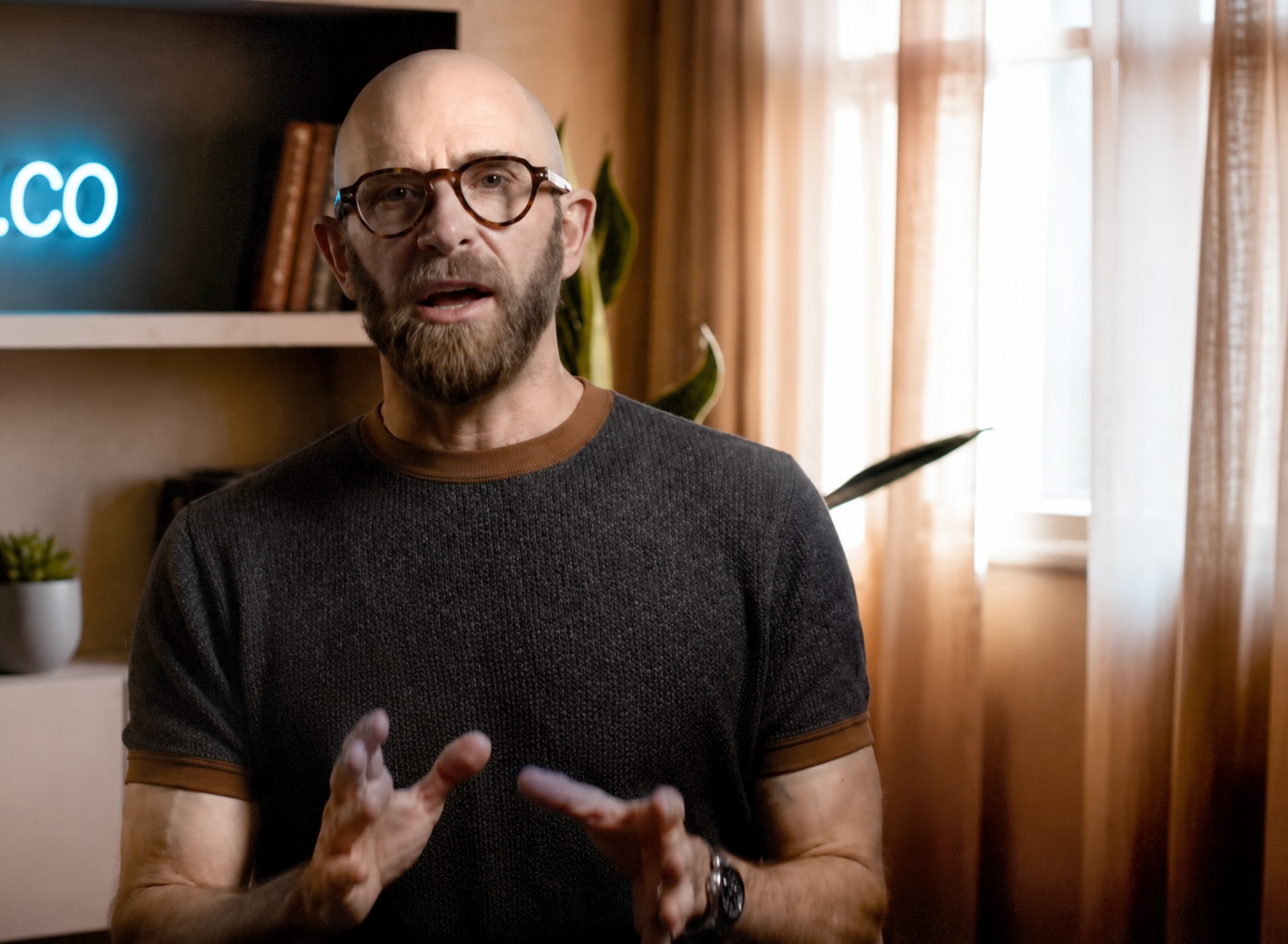
Simon Whistler
Simon Whistler is one of YouTube's most prolific educational creators. WarFronts is his deep dive into geopolitics, conflict analysis, and defense strategy.
Intel Q&A
Why did David Stirling create the SAS, and who approved it?
Serving with No. 8 Commando in North Africa, Stirling was frustrated that large-group deployments left men vulnerable to detection. He proposed a unit of small, hyper-trained teams that would parachute behind enemy lines and hit high-value targets such as aircraft and supply lines. General Claude Auchinleck, Commander-in-Chief of the Middle East, gave him the go-ahead in July 1941 to recruit five officers and sixty enlisted men.
What happened on the SAS’s first mission, and how did the unit recover?
Operation Squatter in November 1941 was a disaster: high winds scattered the drop, the ground was waterlogged, not one man reached his objective, and only 22 of 62 men returned. Stirling regrouped by integrating with the Long-Range Desert Group and switching from parachute to ground infiltration by truck and jeep. The very next operation destroyed 61 aircraft, and by May 1943 SAS operations across North Africa had destroyed more than 300 aircraft in total.
Why was the SAS disbanded after World War II, and how was it reconstituted?
Prime Minister Clement Attlee’s postwar defense cuts led to the SAS being formally axed on 8 October 1945. The mistake became apparent almost immediately: when the Greek Civil War broke out in 1946, Attlee needed exactly the kind of covert small-group capability the SAS had provided. Remaining veterans were assembled into an ad-hoc unit under MI6 command and deployed to Greece, and the three-regiment Cold War SAS — 21 SAS, 22 SAS, and 23 SAS — followed between 1947 and 1959.
What happened during Operation Nimrod at the Iranian Embassy Siege?
On 30 April 1980, six armed men seized the Iranian Embassy in London and took 26 hostages. After six days an escalation led the SAS to launch Operation Nimrod: Red Team abseiled from the roof while Blue Team dropped a stun grenade through a skylight. Despite one abseiler becoming entangled, forcing entry by sledgehammer, the entire operation took just 17 minutes — five of the six gunmen were killed, the sixth taken prisoner, and all remaining hostages were evacuated safely.
What made the Iranian Embassy Siege such a turning point for the SAS’s public profile?
Before 1980 the SAS was essentially unknown outside military circles. The siege was conducted live on television in front of the world’s cameras, with black-clad operators rappelling down a grand building before storming it in broad daylight. That dramatic footage made the SAS a global household name overnight, and the resulting media hunger drove coverage of every subsequent conflict the UK entered, which in turn fed a wave of books, films, and video games that cemented the unit’s mythical status.